
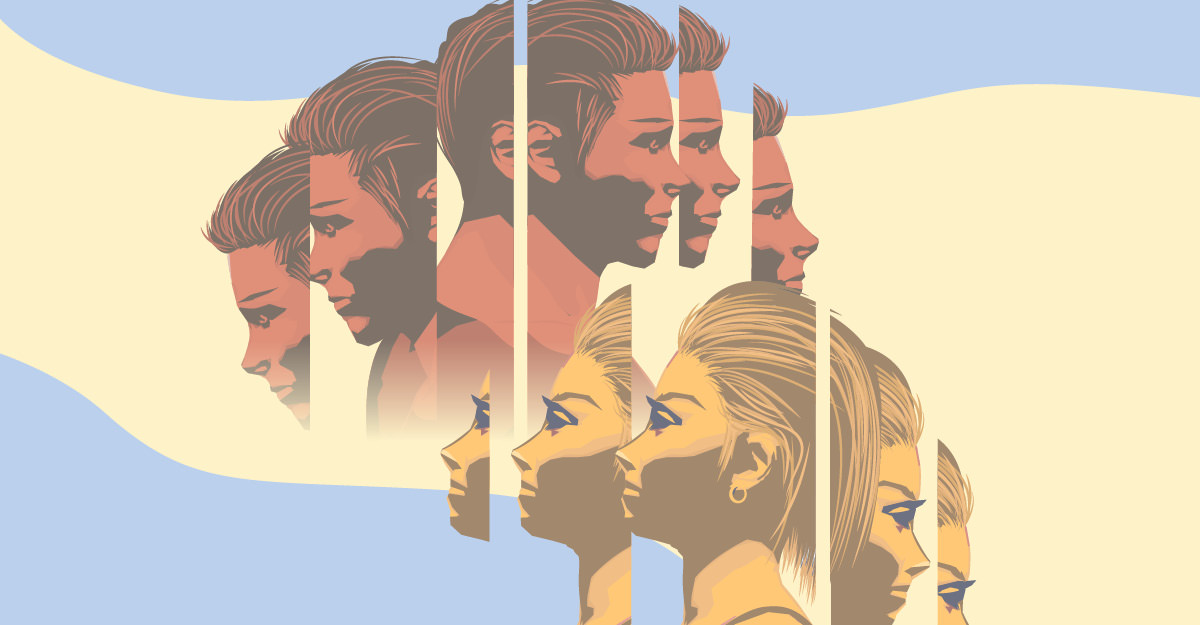
When I think about mental health, the first thing that comes to mind is self-awareness.
This is mostly due to workshops I have attended on the campus of Southeast New Mexico College (SENMC). These free workshops, offered by the college for its students, faculty, staff, and the community of Carlsbad, are called Mind Ctrl and have occurred monthly since August of 2022 and are scheduled through May of 2023. Honor Medina, MFT leads these workshops and shares her knowledge with the audience. I have attended every session thus far and each one has a different topic for discussion. The insights I have gained about myself have been tremendously helpful in my everyday life, and I want to share some of that with you in hopes that it can be helpful for you too.
Let us start with the question: what is mental health? Mental health can be described as our well-being; emotionally, psychologically, and socially. Our environment is a big factor to our mental health and well-being, as are our cultural influences, but the rest lies within ourselves.
“Every emotion and behavior we have is a response to a need we have,” Medina shared. She likens our needs to a game of Jenga. We have foundational needs that must be met, or the rest becomes shaky. These needs are broken down into four categories: safety, connection, learning, and meaning & purpose.
Our safety needs include emotional, spiritual, physical, and financial safety. The next need, connection, involves being seen and heard, while learning includes growth. Meaning & purpose include our sense of direction and what brings us significance in life. Needs can sometimes get put into the want category, but it is important to note that needs are not wants and needs are non-negotiable. For balanced well-being, our needs must be met. When they are not met, and we feel emotional about it, there are tools to work through our feelings and help ourselves.
A couple of these tools are awareness and grounding. When an event (E) happens, what is our response (R) and how does that affect the outcome (O)? This is a formula (E + R = O) Medina shares for people to assess themselves. To use awareness as a tool, look at your response. Are you sweaty or nervous? Did your heart rate go up? On a scale of one to ten, where are you at? One is just fine, while a seven or eight puts a person in an uncomfortable place, and ten is just overwhelming. We can use our bodies as a barometer to gauge our emotional energy. Once we are aware of where we are emotionally, we can start to bring ourselves back to where we want to be. Grounding is an excellent way to do that.
Grounding is a self-soothing skill used when feeling overwhelmed by what is going on around us. Pressure points, specifically facial pressure points are a good place to start. Rubbing the temples or pulling on or massaging the ears are examples of grounding, a natural response. Water is an excellent source for grounding as well. Sometimes putting your hands under running water or splashing some water on your face can bring you back to yourself.
Practice doing something that will get you focusing on a sense. For example, breathe deeply in through the nose and out through the mouth or feel for your toes and do a body scan up to your head. These actions can help you become more aware of yourself and how you are feeling which will then assist in moving you forward. Keep in mind, it takes practice, patience, and persistence to enhance your self-support system.
“Mental health needs to be done with peace and love. It takes a lot of risk and vulnerability to step outside of comfort zones and known ideals to share mental health concerns,” Medina said. Mental health can be taken care of through spiritual means with a connection or relationship. The best first step in maintaining our mental health is to seek out relationships that can be healing. This can come in the form of a pastor, life coach, elder, or therapist to name a few options.
It can be hard to ask for help, as our ego tends to get in the way. The ego is a cerebral function that protects us from feeling and is involved in how we are perceived by others. Medina shared that the ego makes a terrible master and is better as a co-pilot or servant.
“If your mental health is poor, it can wreak havoc on your physical health. When your mental health is worse, physical recovery takes longer. There is medical evidence that shows those with mental health balance have better recovery time,” shared Medina. Think about a time when you have been really stressed. That stress can rest in your shoulders or knees or any other body part. My stress accumulates in my hips, therefore when my hips start hurting (especially if I have not been doing any strenuous physical activity) I look at what I have happening in my life and find ways to reduce the stress. Finding balance with our mental health and having ways to cope with it is gold according to Medina, as our mental health can impact our goals and relationships.
Mental health is a personal experience, one that we each must work on individually. It takes effort and energy to cultivate it for yourself. Learning to be present in the moment can help with our self-awareness. May your journey towards improved mental health be all that you need it to be.
References & Resources
- cdc.gov/mentalhealth/index.htm
- mhanational.org/mhamapping/mha-state-county-data
- https://988lifeline.org
- who.int/en/news-room/fact-sheets/detail/mental-health-strengthening-our-response
- https://nami.org/mhstats
Eddy County Resources
Jamie Covington
411 N. Canal / Carlsbad, NM 88220
575.361.5185
Golden Services
800 W. Pierce St. / Carlsbad, NM 88220
575.885.3082
Presbyterian Medical Services
914 N. Canal / Carlsbad, NM 88220
575.885.4836
Permian Basin Counseling & Guidance
102 S. Main, Suite C / Carlsbad, NM 88220
info@pbcg.org
(575) 249-2561
www.permianbasincounseling.org
Artesia General Hospital – Memorial Family Practice
702 N. 13th St. / Artesia, NM 88210
(575) 746-3119
www.artesiageneral.com/centers-of-care/behavioral-health
Artesia Family Health Center
1105 Memorial Drive / Artesia, NM 88210
(575) 746-9848
www.pmsnm.org/locations/artesia-family-health-center
May is National Mental Health Awareness Month
Early Warning Signs
Not sure if you or someone you know is living with mental health problems? Experiencing one or more of the following feelings or behaviors can be an early warning sign of a problem:
- Eating or sleeping too much or too little
- Pulling away from people and usual activities
- Having low or no energy
- Feeling numb or like nothing matters
- Having unexplained aches and pains
- Feeling helpless or hopeless
- Smoking, drinking, or using drugs more than usual
- Feeling unusually confused, forgetful, on edge, angry, upset, worried, or scared
- Yelling or fighting with family and friends
- Experiencing severe mood swings that cause problems in relationships
- Having persistent thoughts and memories you can’t get out of your head
- Hearing voices or believing things that are not true
- Thinking of harming yourself or others
- Inability to perform daily tasks like taking care of your kids or getting to work or school
US Department of Health and Human Services website
Mental Health Facts
- 1 in 5 U.S. adults experience mental illness each year
- 1 in 20 U.S. adults experience serious mental illness each year
- 1 in 6 U.S. youth aged 6-17 experience a mental health disorder each year
- 50% of all lifetime mental illness begins by age 14, and 75% by age 24
- Suicide is the 2nd leading cause of death among people aged 10-14
https://nami.org/mhstats
Ways to Cope with Stress
- Take care of your body
- Make time to unwind
- Connect with others
- Connect with your community or faith-based organizations
- Take breaks from watching, reading, or listening to news stories, including those on social media
https://www.cdc.gov/mentalhealth/tools-resources/index.htm
Tips to Improve Mental Health
- Track gratitude and achievement with a journal
- Set up a getaway!
- Spend some time with a
- furry friend
- Be a tourist in your own town
- Do something with friends and family
- Take 30 minutes to go for a walk in nature
- Do your best to enjoy 15 minutes of sunshine
https://www.mhanational.org/31-tips-boost-your-mental-health
Ways to Get Help
- Talk with a healthcare professional
- Connect with friends and family
- Join a support group
Article written by Michele Robertson and originally published in Focus on Carlsbad 2023 Spring edition.