
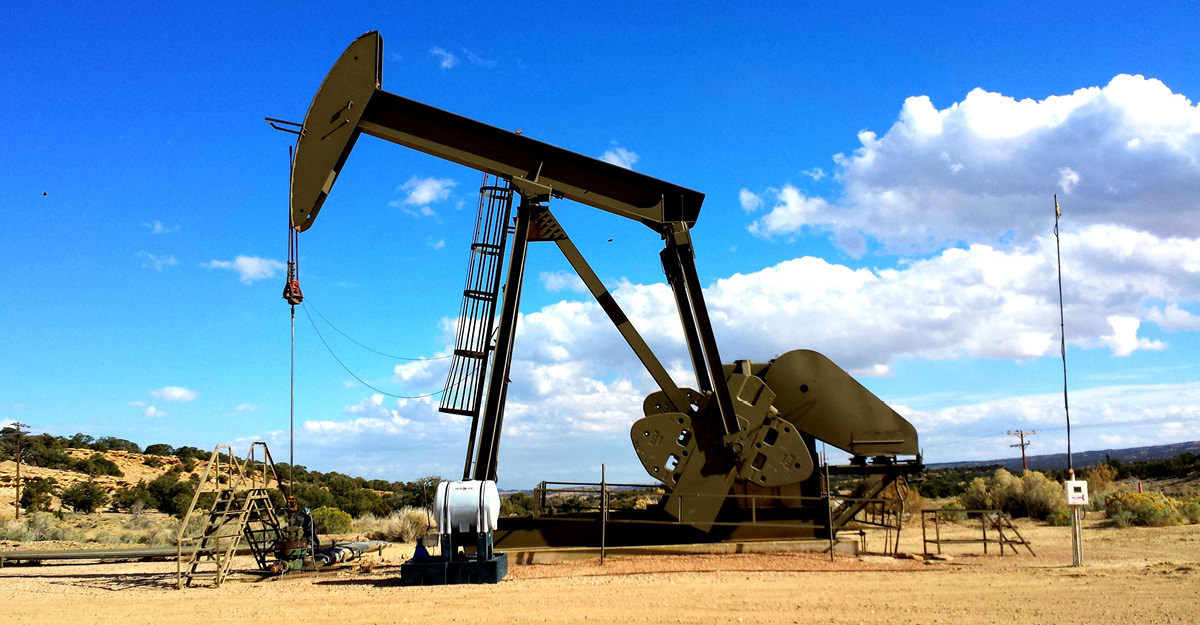
Eddy County is no stranger to oil and gas production and how the industry supports our local communities and state.

In fact, it would be easy to note that oil and gas contributed $13.1 billion to the Total State Revenue and $7.5 billion to the General State Fund and supports over 100,000 direct and indirect jobs.1 Even a cursory internet search would remind us that “New Mexico is the nation’s second-largest crude oil-producing state” and “produces about 11 times more energy than it consumes,2” making us not just a good friend but a good neighbor. Yet the most significant benefit of the New Mexico oil and gas industry often goes unnoticed or is misunderstood. While many, again, are quick to say that oil and gas production maintains and strengthens New Mexico’s education system, far fewer are aware of how that is done. According to the New Mexico Tax Research Institute, “The largest single category of General Fund recurring spending is public education,3” and the revenue generated is specially earmarked for teacher salaries and classroom supplies and serves over 126,000 students annually.4 However, the most interesting (and specific to this area) element of such funding lies in “higher education.” The oil and gas industry invests over $638 million dollars in the sector, but that revenue has many nuanced and varied uses. It allocates funds for school construction, early childhood programs, and, of course, traditional academics, while also supporting local community colleges and workforce development.
The oil and gas industry is not a faceless corporation; it is hometown born and bred. Taking the latter term into significant consideration, oil and gas is literally fueling young minds. Without its profound care for the state and detailed outlook into the future, we would not have such a robust workforce who are—as noted above—leaders in both industrial production and investments in the community. On one front, its inputs are largely responsible for training New Mexicans for the trades and academia, but on a second level, oil and gas has been instrumental to all New Mexicans. In fact, one could argue that no life in New Mexico has gone untouched. It would be difficult to identify anyone who does not have a teacher or student in the pipeline of their family, a derrick hand in their close group of friends, or has not taken advantage of the education benefits of the industry to become a well-oiled machine. So, when you want to thank oil and gas for jobs, economic growth, and education, you do not have to call corporate; you just have look around the corner (or in the mirror) to find someone who is reciprocally working for the industry that sustains and uplifts them. To modify a turn of a phrase, oil and gas has invested in New Mexico from the cradle to the community.

Reference
- “How Oil & Gas Works for You.” New Mexico Oil and Gas Association.2025. www.nmoga.org/industry_impact.
- “New Mexico.” U.S. Energy Information Administration: Independent Statistics and Analysis. 2025. www.eia.gov/states/NM/overview#tabs-5.
- New Mexico Tax Research Institute. p.23. 2023. https://cdn.ymaws.com/www.nmtri.org/resource/resmgr/studies_and_reports/FY_23_Final_Report.pdf
- “Where Does It Go?” New Mexico Oil and Gas Association.2025. www.nmoga.org/industry_impact.
Article written by Dr. Jonathan M. Wilson and originally published in Focus on Carlsbad 2026 Spring edition.

Dr. Jonathan M. Wilson
Dr. Jonathan M. Wilson is the Dean of Teaching and Learning and an Associate Professor of English at Southeast New Mexico College. He holds a PhD in English Studies from the University of Texas at Arlington with emphases in 19th and 20th century American Literature, Rhetoric and Writing, and Literary Theory and a specialization in Native American Literature(s). He completed his BA and MA in English Studies at Eastern New Mexico University. Courses taught include Professional and Technical Writing, Rhetoric and Writing, Writing in the Humanities and Social Sciences with emphasis on American Culture and Society, and Narrative Theory and Discourse. As Dean, he manages, evaluates, and implements assessment practices and processes, fosters a culture of reflection, and advocates and provides professional development opportunities for faculty.