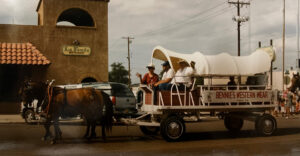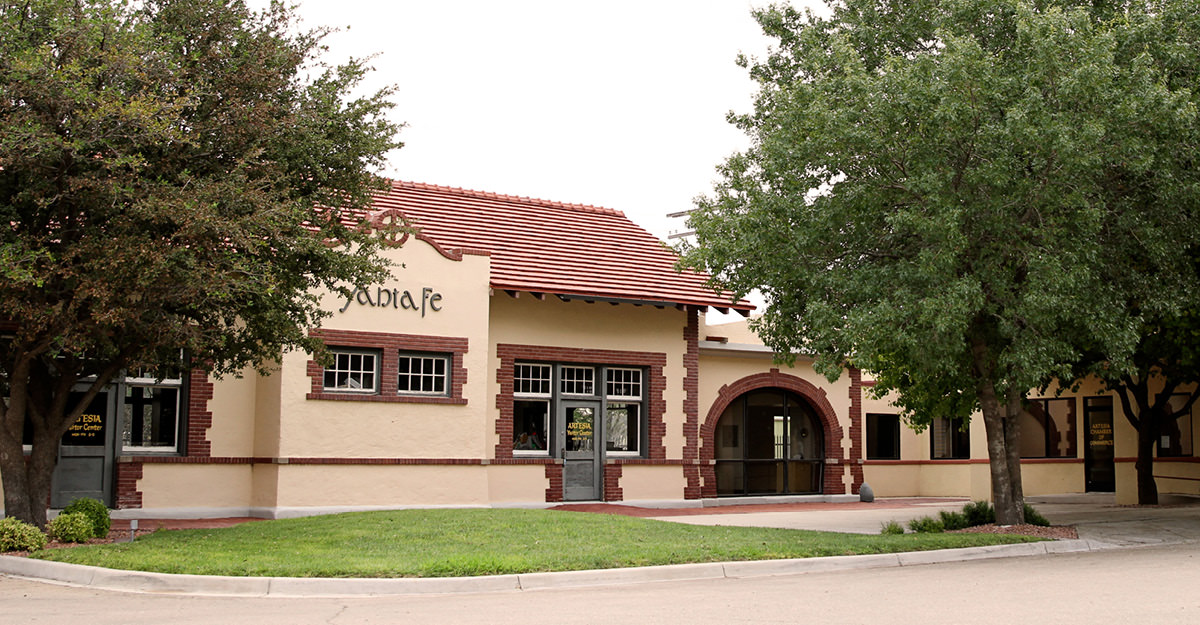


From the hallways of Artesia High School to the cockpit of the world’s most advanced military aircraft, United States Air Force Capt. Chris Worley launched his career from small-town America.
An active participant in FFA, band, sports, and academics, Worley made the most of all available opportunities. It was in these spaces that he learned the skills that would later be crucial as a fighter pilot.
Worley’s love of aviation was instilled by his dad, Randy Worley, but he never considered flying as a profession. When Worley left Artesia for Oklahoma State University, his sights were set on a career in engineering. He soon realized that it was not a good fit and switched to aviation, a path that presented two piloting routes: commercial and military. Based on sound advice from the late Lt. Col. Thomas Archibald, a mentor from church, Worley joined the Reserve Officers’ Training Corps (ROTC) program in college to “try it and see.” This decision charted a course of challenge and adventure in ways yet to be discovered.
A critical, yet often overlooked, aspect of a pilot’s career is the requirement of continuous education. “Everybody sees Top Gun and thinks you just go fly, then go hang out on the beach,” Worley shared. “Being a fighter pilot is not a quick process; it takes a lot of time. You can’t just show up and expect to be the best person out there. The studying never stops. You’re constantly learning new tactics, new systems, new weapons.”
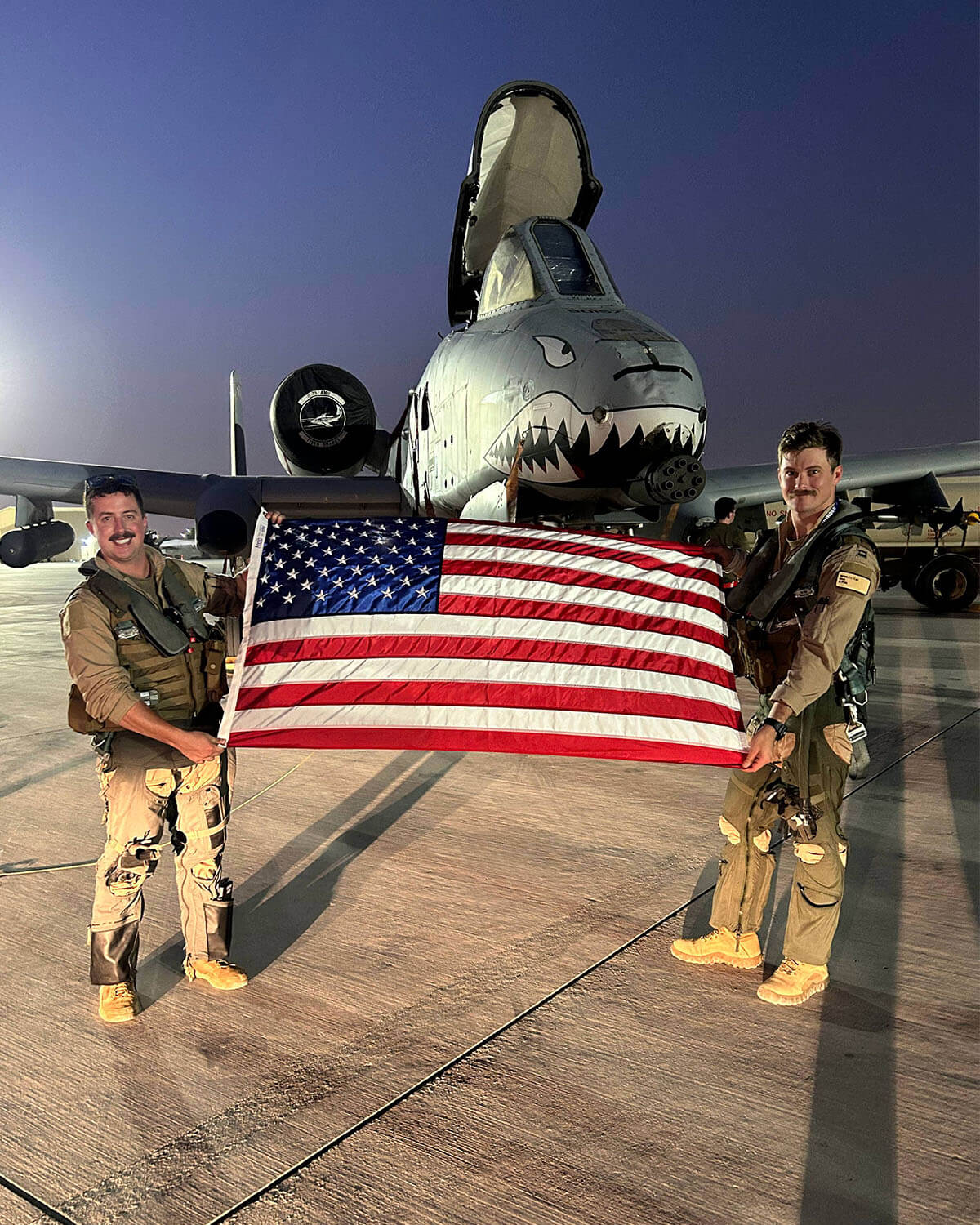
Upon graduation, Worley moved to Sheppard Air Force Base in Texas for undergraduate pilot training and the A-10 B-course. Studying and long hours continued as he moved to Osan Air Base in South Korea to his first A-10 operational base. Two years later, he was stationed in Georgia for a three-year period.
Worley’s early years of service were in the cockpit of the A-10, protecting troops on the ground. “If the A-10 came in, it meant somebody needed help, and we were able to give it,” Worley shared. “I’ve talked with a lot of guys who’ve been deployed and been in some really bad situations, and they’ve told me, ‘Man, we thought we weren’t going to make it out that day, and then the A-10 came in and saved us all. It was the best day of our lives.’” A fighter pilot showing up on someone’s worst day may be routine, but it is anything but ordinary.
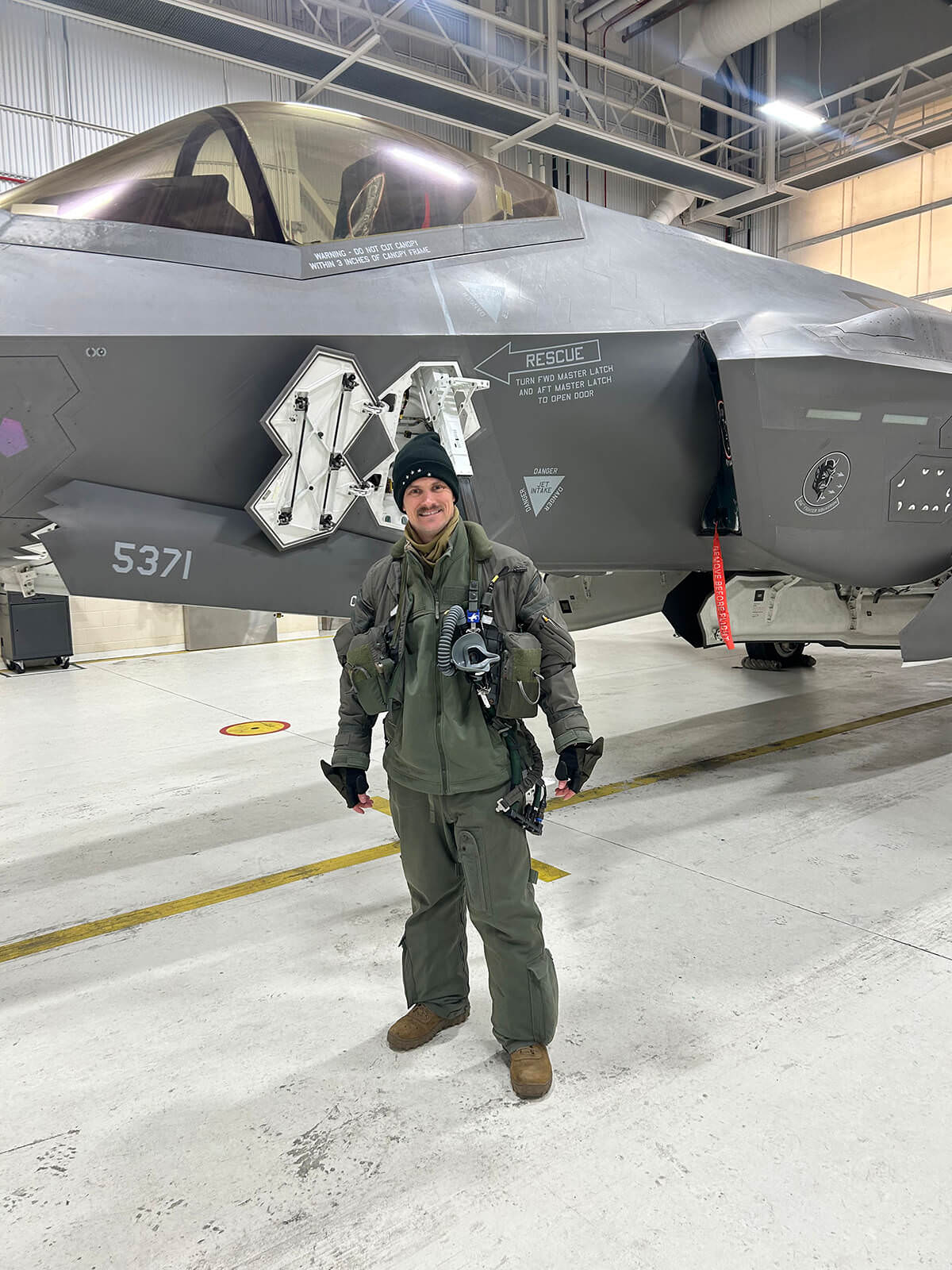
When news came that the A-10 would be retired over the coming years, Worley stepped up to the challenge of learning an entirely new aircraft, the F-35. He moved to Phoenix for a six-month transition course. After completion, he settled at his current station, Eielson Air Force Base in Alaska.
The transition to a new jet shifted Worley’s realm of protection from ground to sky. “Now that I’m in the F-35, that’s where I am protecting other aircraft via air-to-air or air-to-ground missions, allowing strike packages access to locations they couldn’t get without the 35,” he explained. During a deployment to Kadena Air Base in Okinawa, Japan, Worley got a front-row seat to the capability of this jet. While on a mission to intercept a Chinese aircraft carrier, he merged with a J-15 (Chinese fighter jet) that was launched from the carrier. The experience confirmed for him that the F-35 is the most technologically advanced aircraft in the world.
Challenges are abundant for fighter pilots, not least among them is maintaining mental presence while enduring tremendous exertion. “You’re making split-second decisions while under a lot of physical strain. As you are pulling G’s, the blood’s rushing from your brain down to your feet. It’s essentially a daily occurrence that you have to watch for and strain against so that you don’t black out.” From 12-hour flight days, hours-long briefs, and high-G maneuvers, the physical and mental preparation grounds decision-making, ensuring that automatic responses are effective when they become the only option.
While these responses are critical during abrupt turns or sudden changes in altitude, even a routine flight can present unforeseen emergencies. Worley reflected on a situation as he was flying from Alaska to Korea. “About a thousand miles from Tokyo, I had a fire light in my left engine, and that’s not good. You go through the process they instill in you from day one: Is this thing actually on fire? Is this fine?” With great relief, he soon concluded that it was just a bad light.
Considering the high-stakes decision-making, immense physical exertion, and personal sacrifice, why does someone choose this career? For Worley, the answer was automatic.
“Whether it’s me flying the A-10 or the F-35, what I am doing in that jet is all based around protecting someone else.” For Worley, like others who serve in the military, success is measured most simply: the people he protects make it home.
A small-town start for this world-class fighter pilot was not a limitation but a launching point. It was less about endless opportunities and more about leaning in, working hard, and growing right at home. Worley’s advice to kids? Find out what you love, then go do it. He reflected on his time in high school, saying, “I wasn’t the smartest kid out there. I put in the hard work. You just have to instill in yourself a little bit of desire, a little bit of that attitude of, ‘You know what? I can do this.’ And then, you gotta actually go out there and work. Hard work pays off, but only if you keep showing up.”
And who knows? You just might be paving the runway for an unrealized dream to take flight.
—
To Captain Worley and the countless men and women who protect our country, to those who walk the ground and those who fly the skies, you are the faces of freedom. It is the hours served in ways we will never know: the studying, training, and persevering. Showing up for the worst-case and standing by for the just-in-case. Our freedom is forged through your sacrifice, and we are forever grateful.
Article written by Allyson Joy and originally published in Focus on Artesia 2026 Spring edition.

Allyson Joy
Allyson Joy is the Associate Publisher of Focus Magazines. She can be reached at allyson@focusnm.com.