
The origins of crop dusting date back to 1921, when the U.S. Department of Agriculture adapted a Curtiss JN-6 "Jenny," a biplane originally designed for military purposes, to deliver lead arsenate dust over fields.
This marked the birth of what would come to be known as “crop dusting.” Over the years, this method of aerial application has undergone a remarkable transformation. Today, the industry has evolved significantly, with modern aircraft now equipped with closed cockpits, turbine engines, and state-of-the-art GPS systems, leading to a shift in terminology. What was once known as crop dusting is now more accurately referred to as “aerial application.”
Aerial application plays an indispensable role in the food production systems of the United States and across the globe, primarily due to its speed and precision. Modern aircraft, often flying at speeds of 135 mph, can cover 8 acres per mile. This allows them to treat vast swaths of land quickly, with a remarkable rate of 18 acres per minute. It is an essential component of modern agriculture, helping to protect crops and increase yields efficiently. In fact, it is estimated that 20% of all farmland in the U.S. is treated via aerial application methods, ensuring that crops receive timely protection from pests, diseases, and other threats.
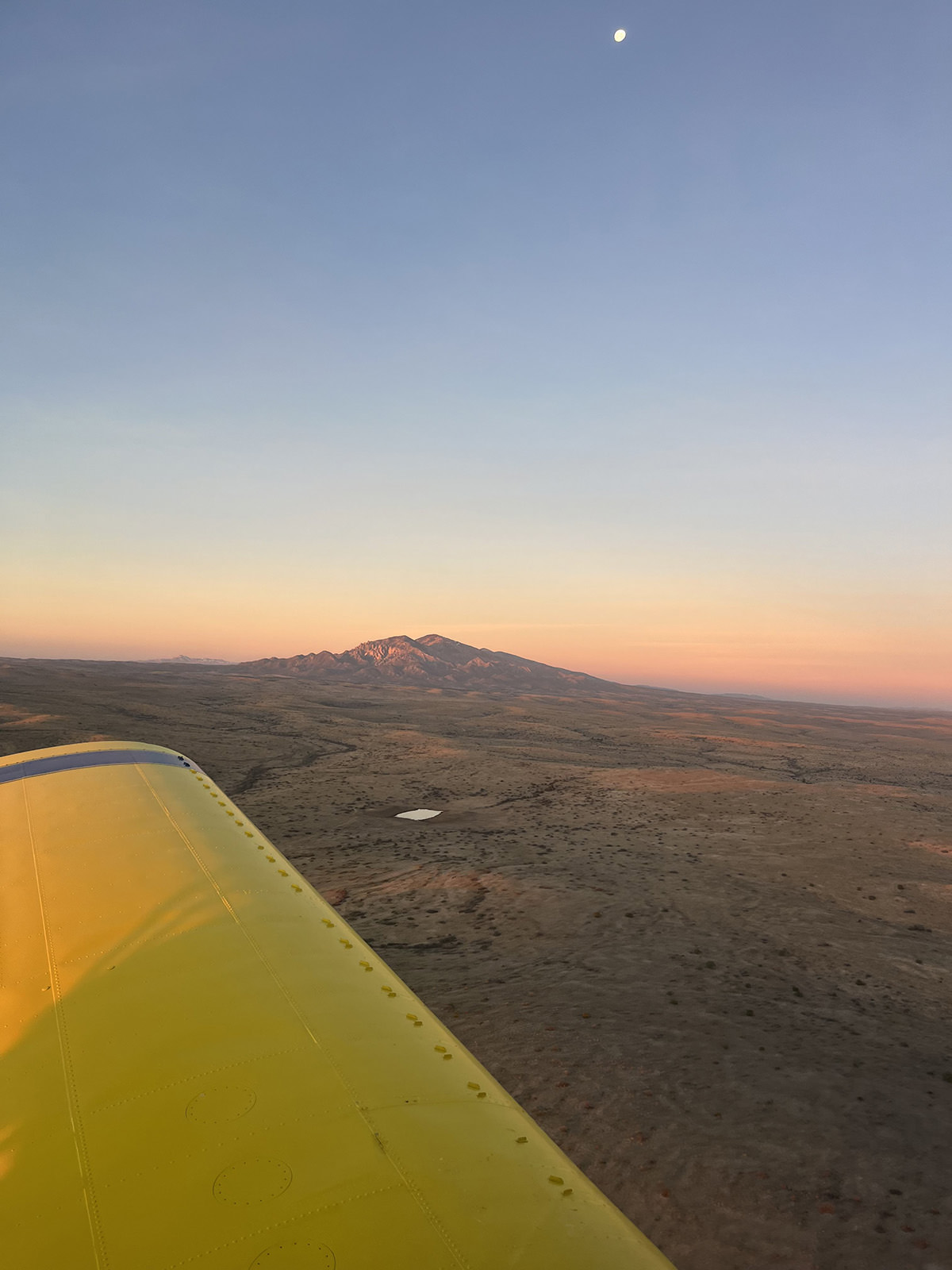
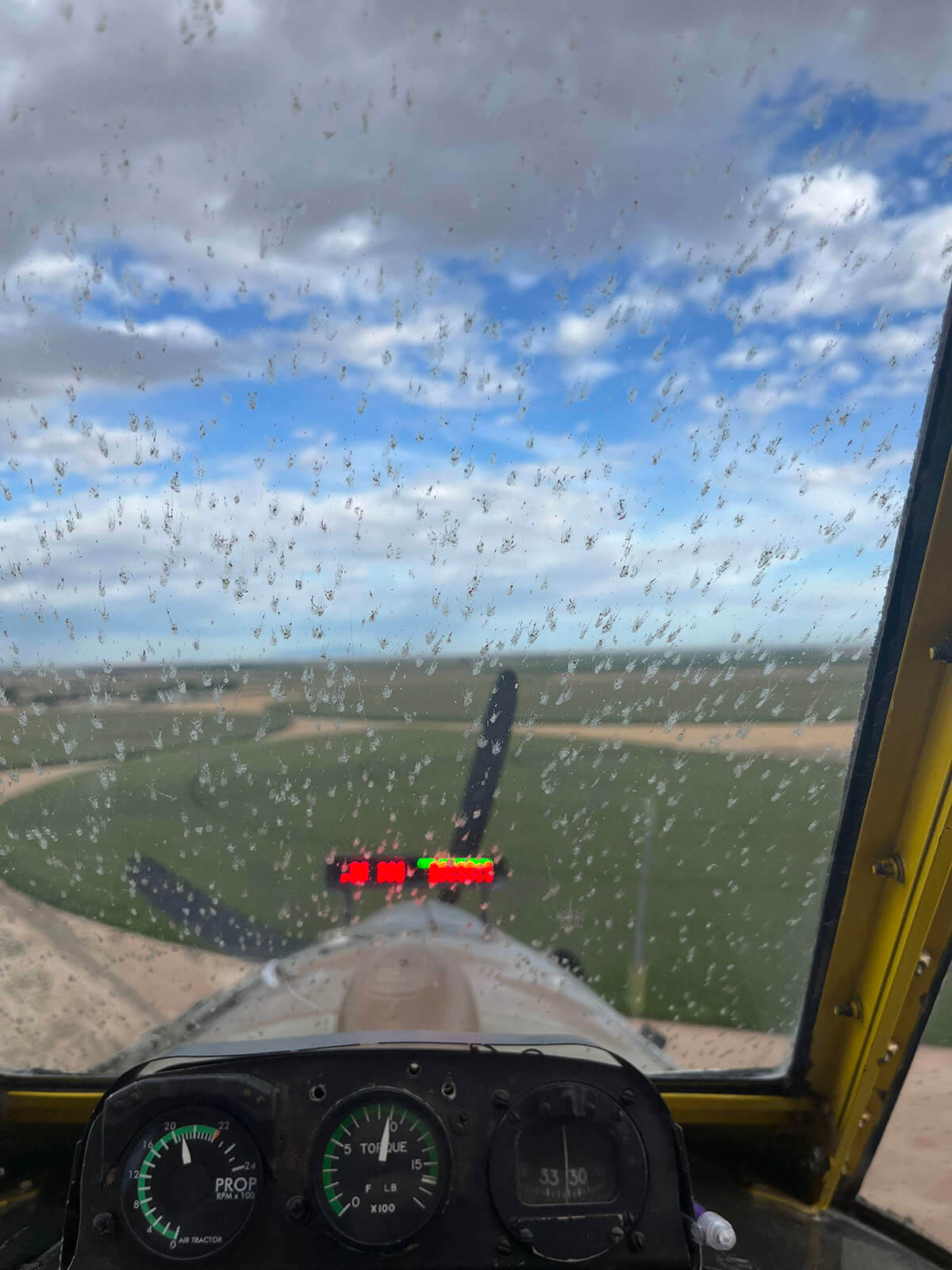
Aerial applicators, while serving as the eyes in the sky, also operate as highly skilled professionals. Pilots of these sophisticated machines are typically around 55 years old, boasting an average of 10,000 flight hours. Their expertise ensures the safe, efficient, and effective application of various substances, including not only crop protection products but also fertilizers, herbicides, insecticides, and even cover crops.
From humble beginnings in the 1920s, aerial application has grown into a cornerstone of modern agriculture, offering a fast, precise, and highly effective way to safeguard crops and support food production worldwide. The impact of this technology cannot be overstated—it’s not only about protecting crops but ensuring that the world’s food supply remains abundant and secure.
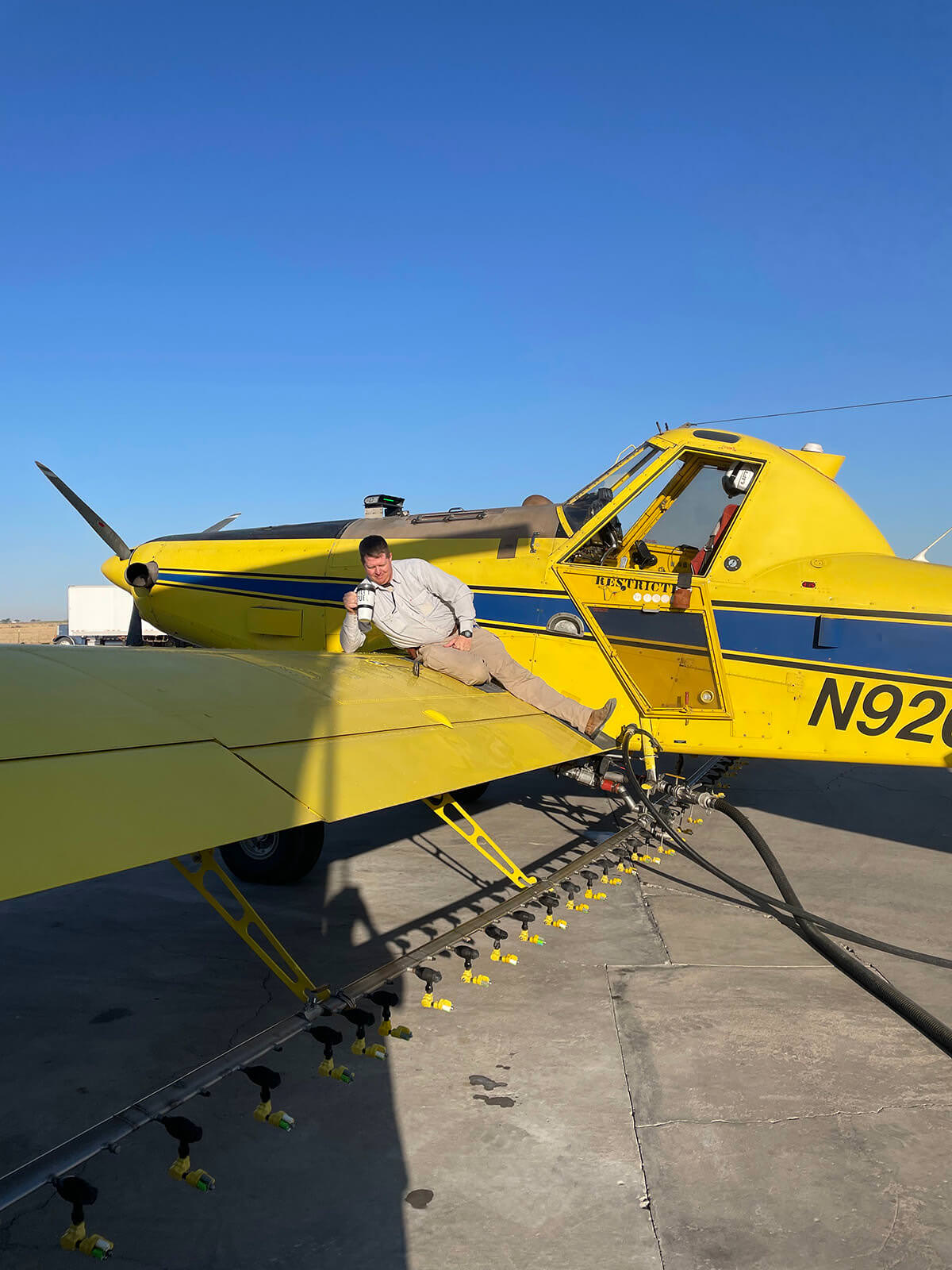
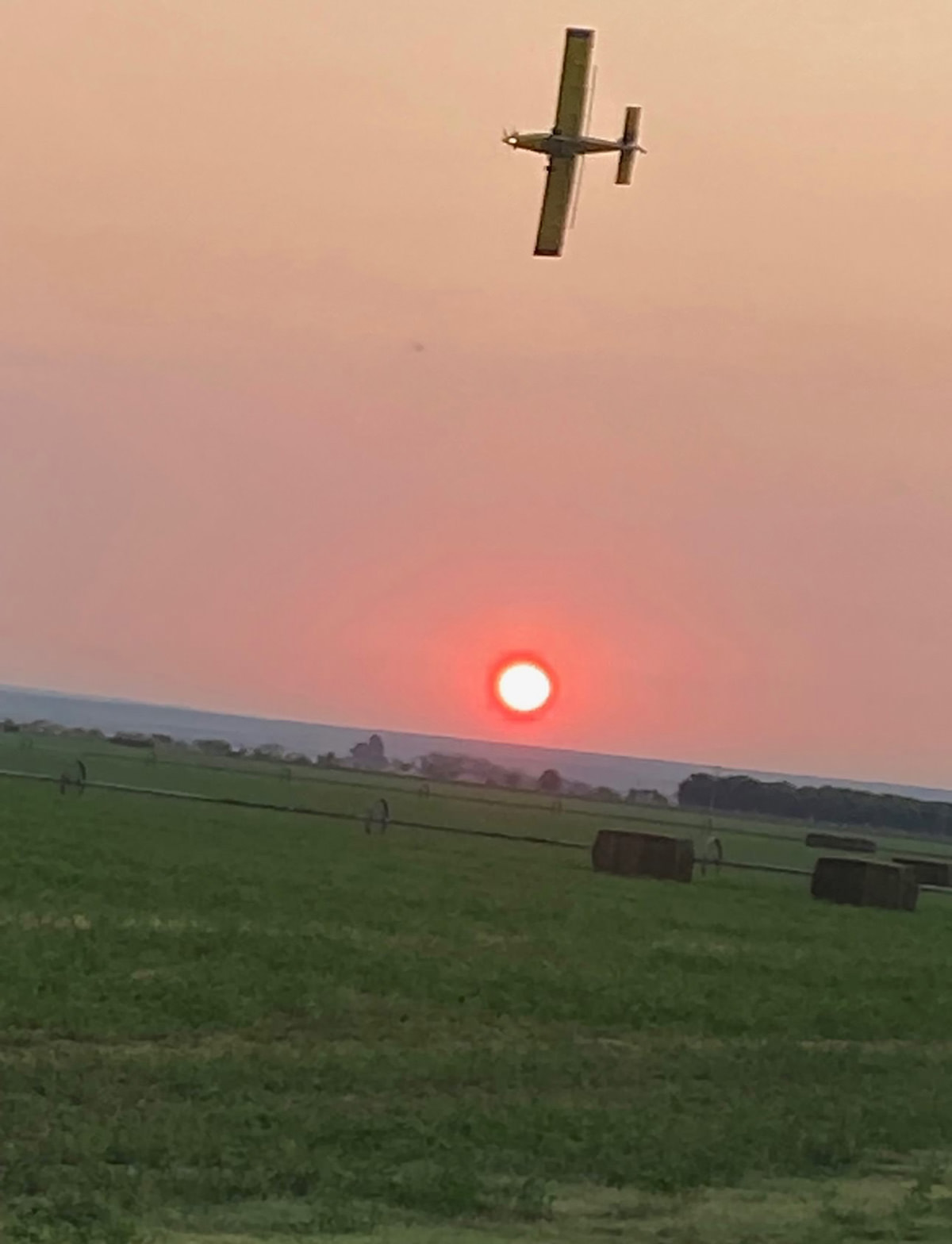
The impact of this industry was unknown to our family until the 1980s. My dad, Richie Crockett, first learned the value of hard work while in the family trucking business. A coworker told him he was an Aerial Applicator and that they should quit trucking to break into the business. Richie agreed. They scrounged up a little money, found an old airplane, and ventured into the spraying business. But, as luck would have it, the guy ended up being a fraud, and Richie did not know what to do. Thankfully, he crossed paths with Andrew, an Englishman who was an actual Aerial Applicator, and they became business partners.
They were originally unsure what to call the company. Then one day, inspiration struck. Andrew hit a power line and hastily returned to the airport. After landing and assessing the damage, Richie asked what had happened. Andrew, in his English accent, answered, “I hit a devil duster” (instead of a “dust devil”). Right then and there, Devil Dusters was established. From 1983 to 2003, the two worked together until Andrew retired and Richie took over as owner and operator.
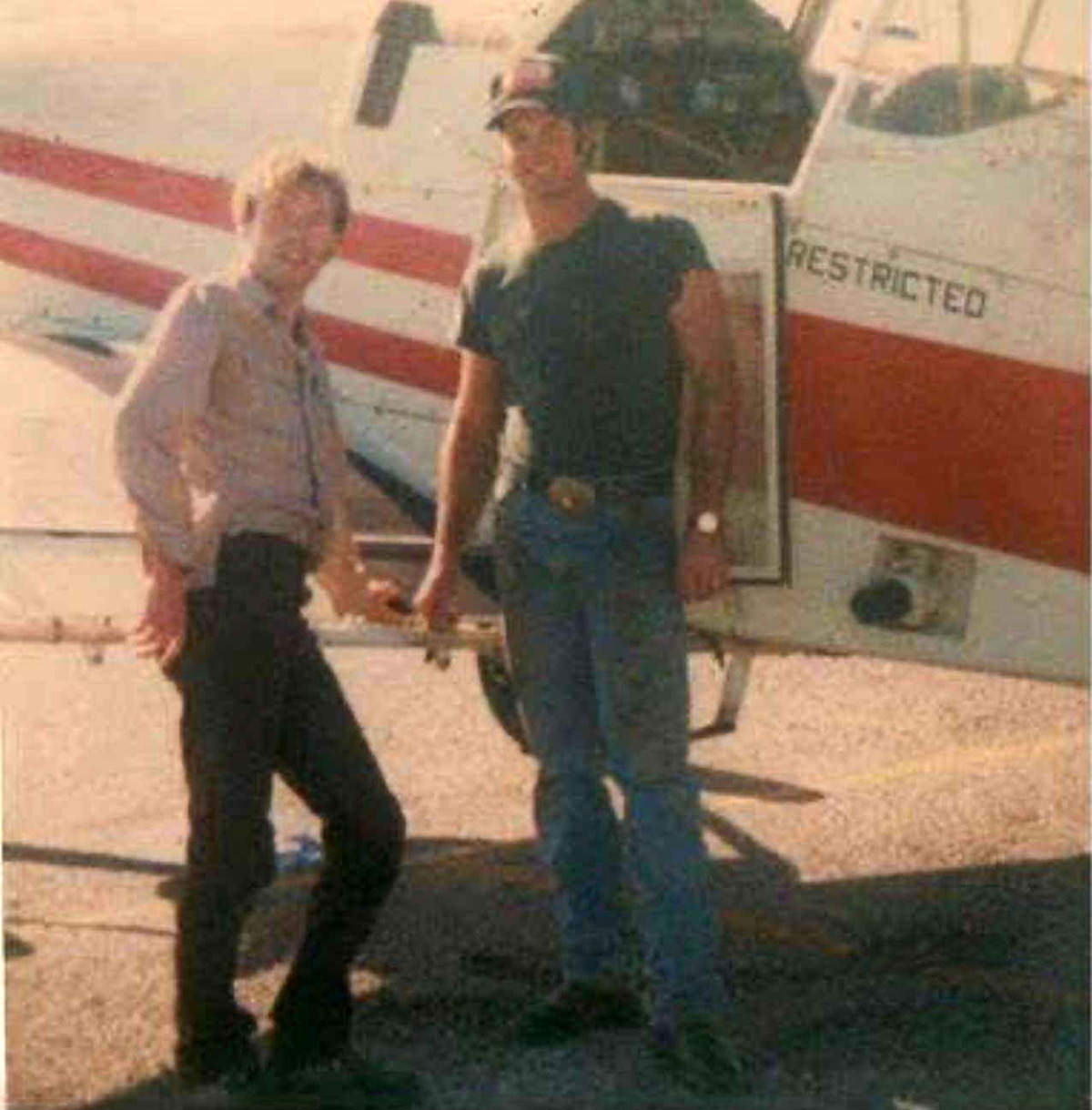
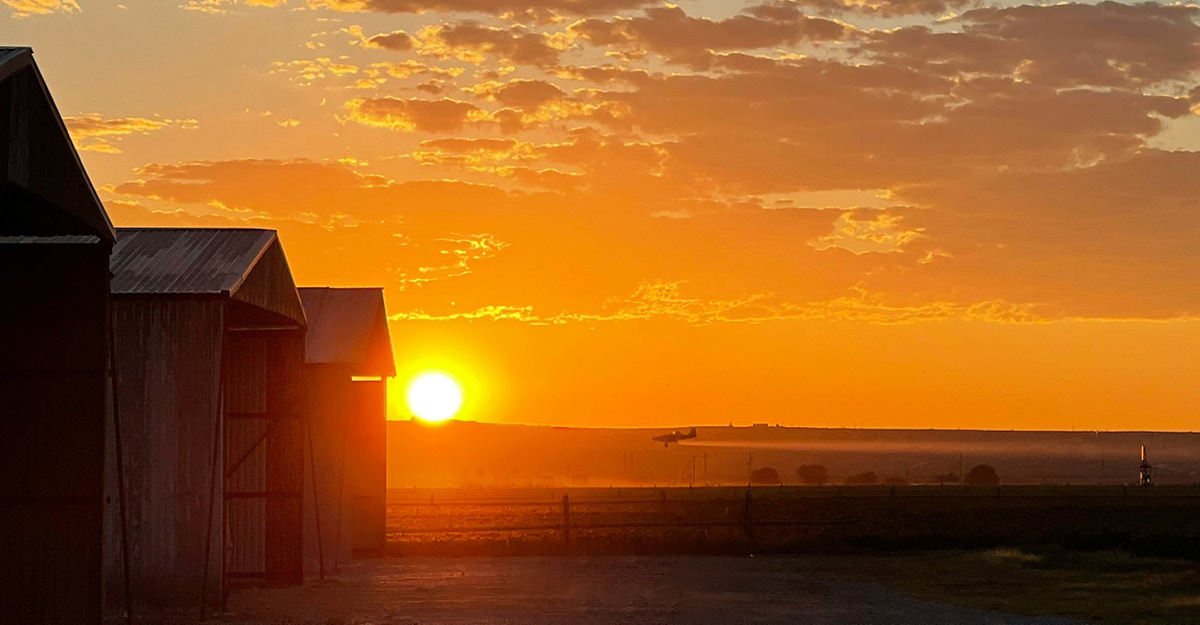
During the early years, my dad worked a lot of hours in both Artesia and Texas, which meant he was sometimes gone weeks at a time. Most of our family time was spent at the airport. The sights, sounds, and smells are etched in the recesses of my mind. I can still recall playing like monkeys on the hangar scaffolding with my brother and getting Styrofoam cups of ice in the terminal building, the smell of coffee and cigarettes filling the air. As we got a little older, my dad bought us a go-kart, and we explored every inch of that airport.
As we continued to grow, our roles changed again, with my mom, brother, and me serving as the ground crew. Once, we were in Arizona re-seeding grass after a forest fire when my dad got a downdraft while in a canyon and had to pancake the airplane on the side of the hill. That was the first time that I understood how dangerous aerial application really is. Even in the chaos of not knowing where my dad was and if he was okay, I have a vivid memory of the calmness my mom presented through the whole thing. She called others to pray while she knelt on the tarmac. I sat in the truck watching her pace, kneel, and pray for him to be okay. In that moment, I knew that no matter what happened, we would be okay, because she was strong and we would get through anything as a family. Thankfully, he survived the crash. And thankfully, we do not have many of these stories to tell.

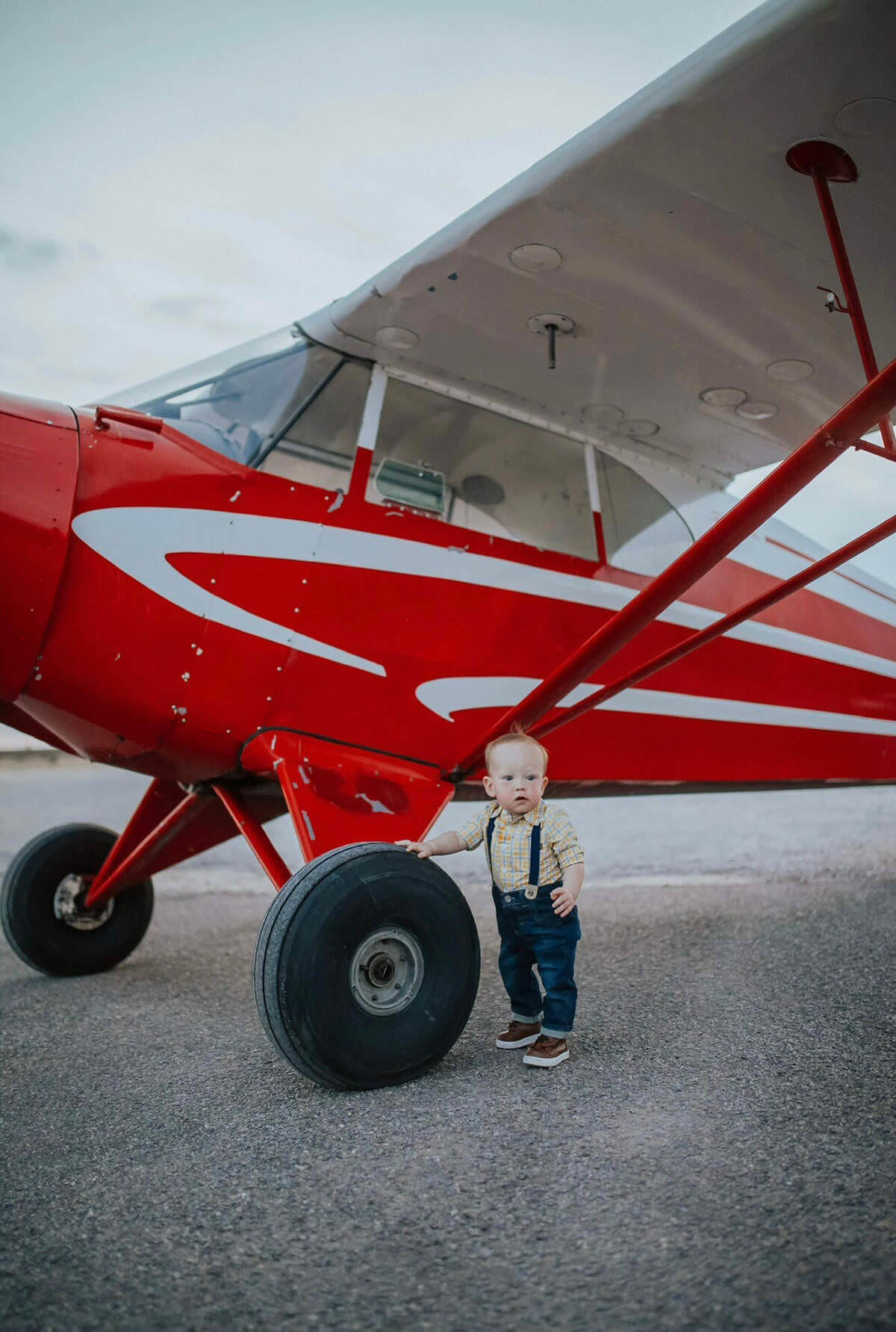
My dad operated out of the Artesia airport until 2003, then built a strip west of town, eventually building a house next to the hangar and runway. In 2007, he sold his operation in Texas and bought a neighboring spray company in Dexter/Roswell. It was nice to have my dad closer to the house and able to see him anytime. But that also meant we were sometimes stuck washing airplanes.
When I moved home from college in 2010, I met Wade while working in the office for my parents. We eventually married and bought the business from them. I knew the hard, long summers of this business also meant sweet winters of more time together. I also knew that Wade had been trained by my dad, whom I consider to be the best pilot. That, in turn, would make Wade the best. He is very cautious and always puts safety first. I cannot say fear or worries never creep in, but when they do, I pray and ask God to protect him and to ease my fears. On those days, I ask Wade to be extra cautious.
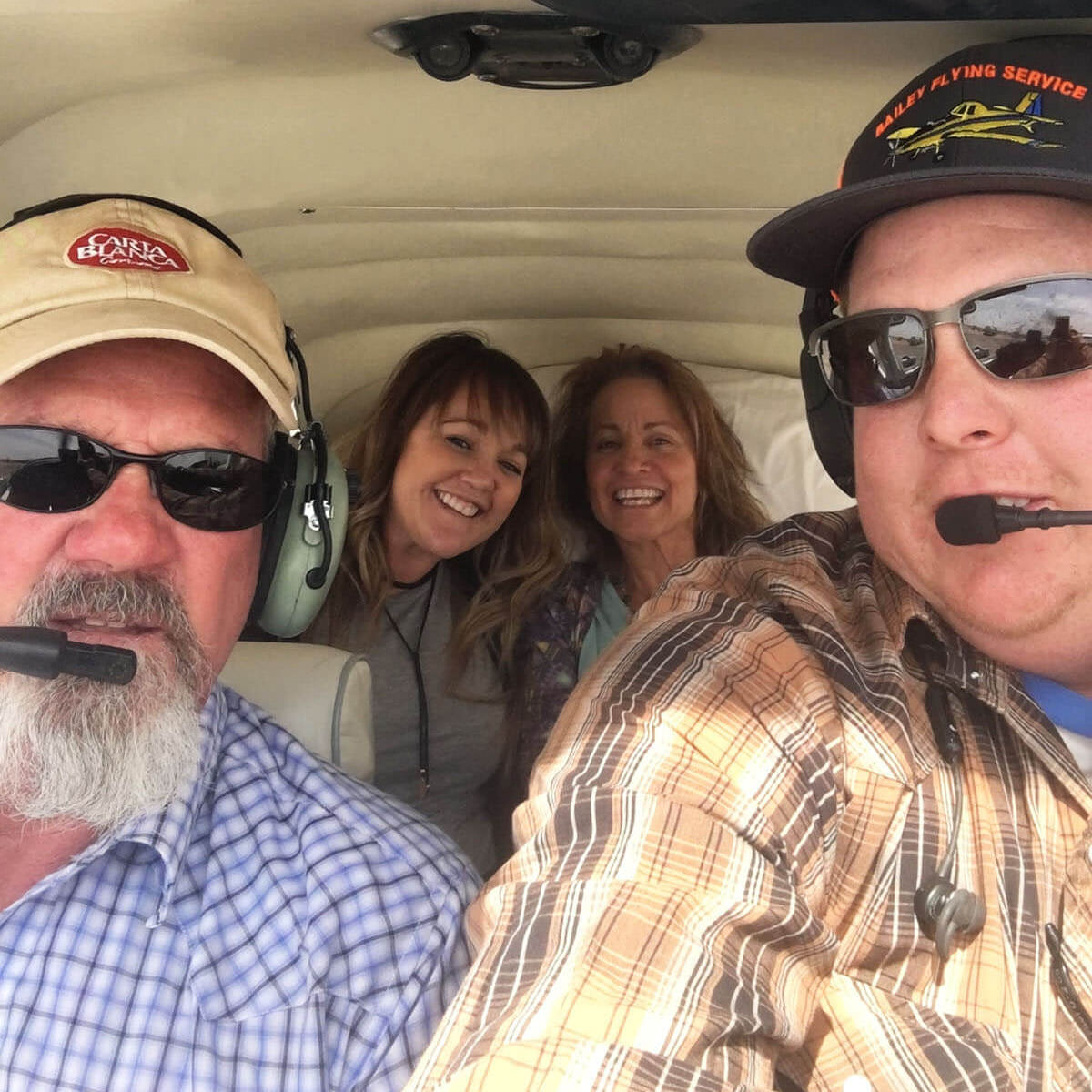
There are many misconceptions around aerial application, primarily that it is all about chemicals, pesticides, and potential harm. Agriculture pilots are some of the most educated and knowledgeable people about all chemicals and what can and cannot be safely used. Many of them are also equipped to spray organic fields. Ultimately, they strive to help farmers and the crops they grow. With 50.4% of New Mexico’s land considered farmland, aerial application is a benefit not only locally but for the state as a whole.
Crop dusting has shaped our lifestyle, starting with early bedtimes and very early mornings. Our lives revolve around the wind gusts, dew points, and temperatures above 90 degrees and below 40 degrees. We do not dictate when the bugs eat the crops or when the weeds get out of hand. Wade jokes all of the time saying, “It is great being self-employed when you have 100 bosses.” This means we do not set our own schedule. As the spring kicks off, we see Wade less and less. By the summer months, the mornings are full of spraying, followed by afternoons and evenings of paperwork, fixing airplanes and pumps, and everything else that goes along with the business.

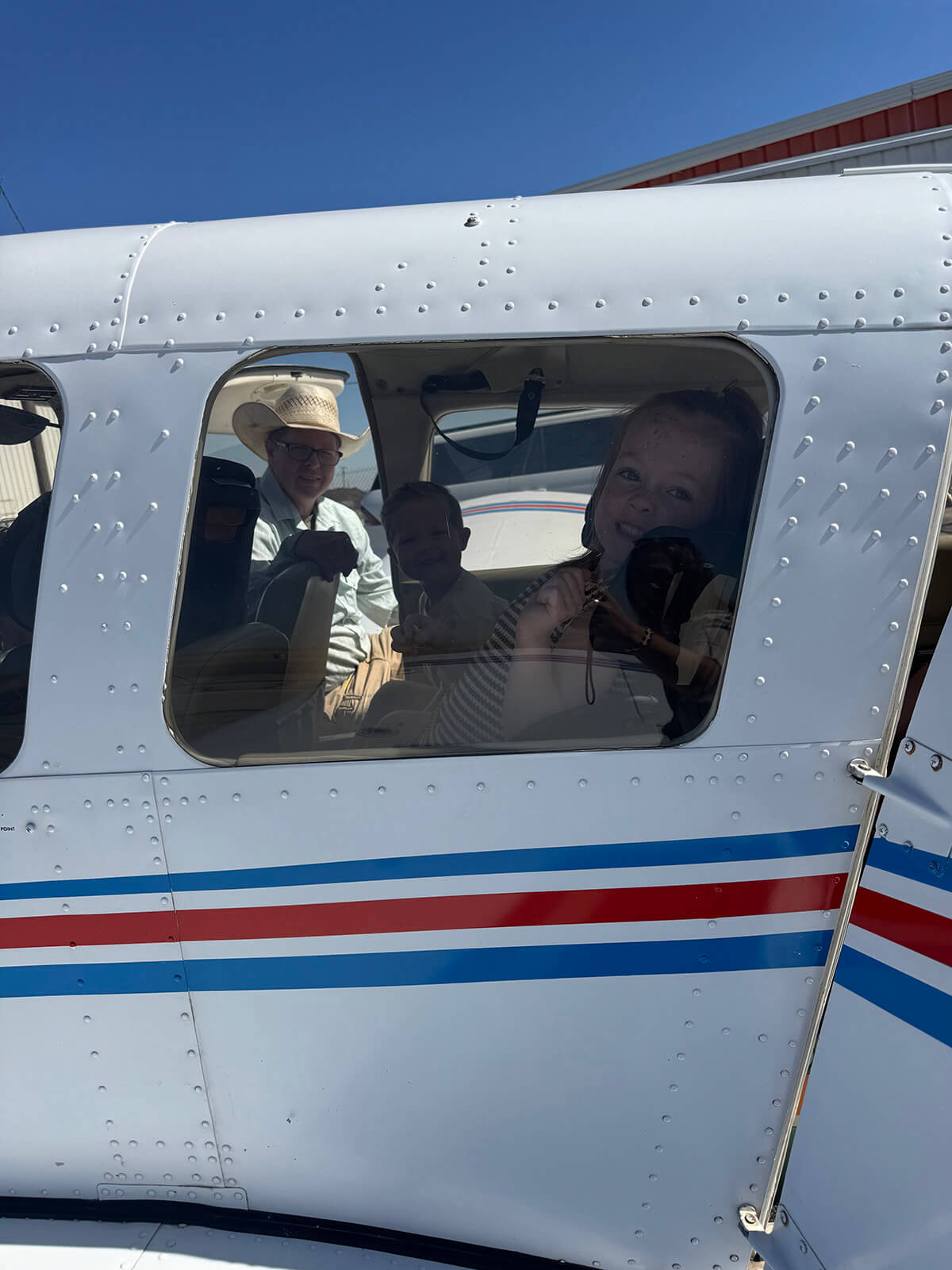
Wade knew at a young age that he wanted to be a pilot, and he achieved that dream. I now see him instill this love into our kids while our son sits in the front on flights. It is special to sit back and watch him fall in love with flying also.
When I think of our business as a whole, it is truly a beautiful thing. We are a small company with few employees (mostly family and/or very close friends), but we have a huge impact on Artesia and the surrounding areas. I feel very honored to be a part of this multi-generational company. As a kid, there were times I wanted nothing to do with the company and felt like I wanted to move away from New Mexico to pursue my “own dreams.” Today, I cannot imagine life any other way.
Article written by Wade and Jessie Berry and originally published in Focus Regional 2025 Winter edition.