The best day to start the clock on Carlsbad’s potash timeline is probably July 31, 1790.
That is the day that the United States Patent and Trademark Office opened its doors for the first time. The first person inside the building was a man named Samuel Hopkins from Vermont who filed for a patent on an “apparatus and process” used for an improvement in the making of potash. President George Washington signed the patent.
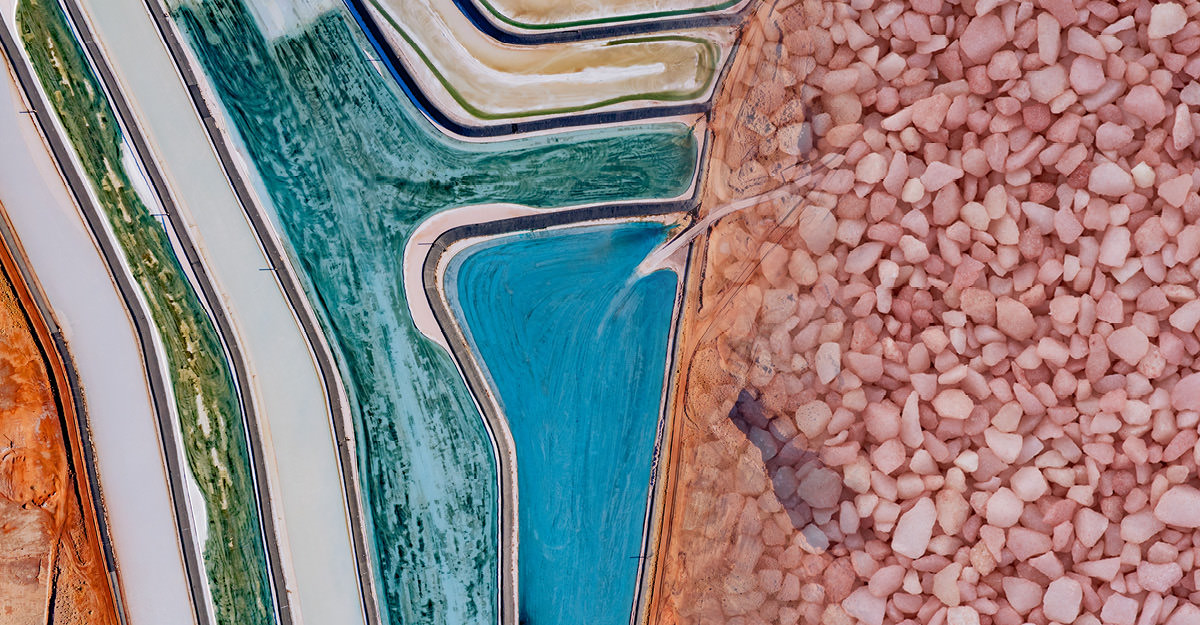
Potash itself, which includes the mined and manufactured salts that contain potassium, had, of course, already been around for millions of years prior to the opening of the patent office. After the water evaporated in ancient sea beds, the potassium salts crystalized into beds of potash ore. These days, it is most commonly used as fertilizer.
Potash was king in Carlsbad long before the nuclear industry arrived and well before oil and gas developed a presence anywhere near to what it is now. On August 1, 1925, a geologist named Vachel Harry McNutt was studying drill cuttings at an oil well outside of Carlsbad when he noticed potash in the cuttings. The first drilling for potash began just a year later. It came at the right time: in 1925, the United States was nearly 100 percent dependent on German potash. Germany established an embargo at the onset of World War I, and potash prices became untenable. The second World War only expanded upon the need for domestic potash.
Thanks to McNutt’s timely discovery, potash in Carlsbad thrived, and the community did as well. Families from mining communities in West Virginia and Oklahoma flocked to southeast New Mexico, where fathers founded steady careers with one of several mining companies. Potash had such a strong presence in Carlsbad that, in 1953, a minor league baseball team here took on the name Potashers. In 1959, a Potasher named Gil Carter, formerly a heavyweight boxer, smacked a home run ball 733 feet. It landed in a peach tree a few blocks away and is widely considered to be the longest home run hit in baseball history.
The potash industry has remained an essential facet of Carlsbad’s legacy. A local diner, Calloway’s Café, prominently displayed potash photos and artifacts while serving its pizza box-sized pancakes. Potash artifacts have also been placed on display across the street from the Pecos River Village Conference Center.
Over the years, the community has benefitted from the experience and expertise of potash miners. In 2012, the Secretary of the Interior issued an order enabling potash mining and oil and gas drilling to take place in the same area of Bureau of Land Management (BLM) land. And, when the time came to figure out how to safely fill a brine well cavity hundreds of feet below the surface in Carlsbad, it was potash experts who took the lead in the statewide effort.
These days, Carlsbad’s potash presence is defined by two companies, Intrepid Potash and the Mosaic Company, each with proud legacies dating back several generations. Every day, hundreds of potash miners head east. Each evening, these community-minded men and women coach softball and baseball teams of children dreaming of hitting the next 733-foot home run. “Companies like Intrepid and Mosaic continue to be pillars in our community, providing good jobs and investing in the well-being of Carlsbad,” said Carlsbad Mayor Rick Lopez.
BLM, Intrepid, Mosaic, and community leaders all came together in early September to celebrate the 100th anniversary of the potash industry in Carlsbad. Geologist Jim Rutley, who has worked in the potash industry for more than 30 years including 18 with the BLM, provided extensive historical and scientific context as the evening’s keynote speaker. Recognizing both the potash industry’s lasting legacy and its modern economic footprint, local leaders still boast of Carlsbad’s vital role.
Mayor Lopez noted that he received first-hand experience about the hard work and dedication that goes into the industry while working in the mines during high school. “We are honored to be celebrating 100 years of potash, a true cornerstone for Southeast New Mexico. Potash has played a vital role in shaping Carlsbad’s history, economy, and identity,” Lopez said. “This milestone is about looking back on a century of achievement, while also recognizing the people and partnerships that will carry us forward into the future.”
I worked for former Carlsbad Mayor Dale Janway for 10 years and enjoyed hearing about the close kinship he felt with all former potash miners we would encounter at public events. In fact, the single highest compliment that Mayor Janway would ever pay anyone was to simply declare, “I used to work with him in the mines.”
It was his way of saying that the guy we met was to be trusted because Carlsbad’s potash miners really are the salt of the earth.
Marksteiner is the executive director of the United Way of Eddy County. He served on Carlsbad’s committee to recognize the 100th anniversary of the potash industry.
Photos provided by Nearlovingsbend.net.
Article written by Kyle Marksteiner and originally published in Focus on Carlsbad 2025 Fall edition.
Kyle Marksteiner
Kyle Marksteiner is the executive director of the United Way of Eddy County. He is also the editorial director of The Carlsbad Local. Marksteiner previously served as the Public Information Officer for the City of Carlsbad. He has more than 25 years of experience in media and communications. He may be reached at director@uweddyco.org.