

Until the mid-1960s, smoking was a socially accepted norm.
One could easily buy cigarettes from vending machines, and smoking was permitted just about everywhere from schools to hospitals. Kids also had easy access to smoking and were targeted through marketing. Cigarettes were not deemed harmful by the Surgeon General until 1964; however, it was known much earlier. Why did the marketing craze continue? Why were children not protected earlier? Namely, because tobacco companies did not want profits to wane, and adults who had been smoking for years did not want to be inconvenienced by new regulations. In reality, many people knew cigarette use was an issue well before the Surgeon General deemed it so.
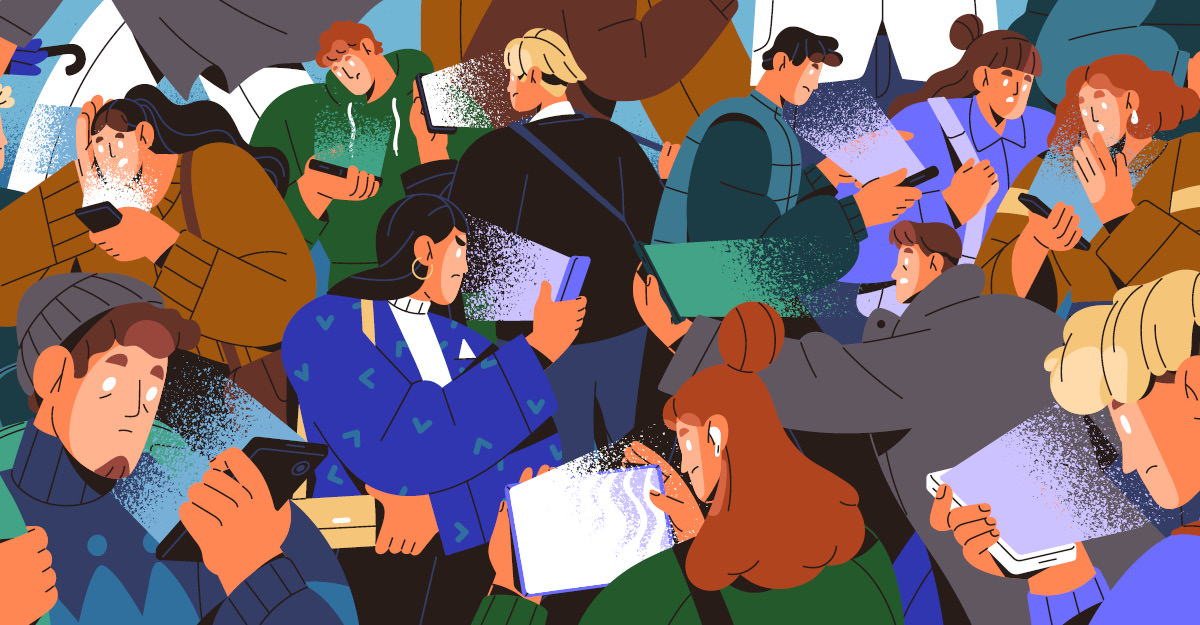
Our society has an equivalent called the smartphone that accesses a vast virtual world and is carried in the palm of children’s hands. Jonathan Haidt’s book, The Anxious Generation, dives deep into how smartphones and their constant pull is causing a mental health crisis in kids. This New York Times best-seller has not only influenced families and schools, but has been recognized nationally in state legislation among both conservatives and progressives.

Ample research (cited in the last 66 pages of The Anxious Generation) shows that depression, anxiety, and rates for self-harm and suicide have significantly risen in adolescents and young adults from both sexes and across all races and social classes since 2010 and continue to rise. Sadly, children born after 1995 have become the “anxious generation.” Strong correlations exist between the crisis and smartphones. Eyebrow-raising trends are now being seen more clearly as researchers look back on the first generation of children raised in a phone-based instead of play-based childhood.
Based on research, Haidt espouses that a huge transformation took place in Gen Z and is explained by two main problems: Parents overprotected children/adolescents in the real world and under-protected them in the virtual (internet-based) world. In general, society has taken away needed independence from children regarding free, unsupervised, old-fashioned neighborhood playing and brought our children inside to let them become engrossed in the unsupervised world of cyberspace where video games, social media, and numerous apps have not only changed how our young interact with each other and their families, but have quite literally rewired the neuropaths in their brains—and not in a good way.
Tech companies understand psychology and use this knowledge to keep users glued to a screen and listening for notifications. In a world where advertising places money in their pockets, it is crucial for these app companies to keep the user immersed as long as possible and continually coming back for more. Thus, mindless scrolling, gaming, and a need to be “followed” and “liked” by as many people as possible supervene.
Why did a mental health crisis predominately affect children born after 1995, but not those born earlier?
Socially
Many born before the mid-1990’s recall getting home from school, hopping on their bicycles, and playing their hearts out with neighborhood friends until dusk. Those afterschool romps included playing on what has now been deemed unsafe playground equipment, participating in child-led games, and traversing the neighborhood to find the next adventure. Social interactions, conflicts, resolutions, choices, rules, etc. were made in person and with little, if any, parental guidance. The neighborhood supervised and raised us. However, the pendulum swung, and it became “far too dangerous” to let children play this way. Instead, after-school routines more commonly consisted of children coming home and being isolated to screens, social media, video games, etc. Childhood consisted of less exploring and physical play, and neighbors stopped interacting and trusting each other as much.
Ultimately, this caused children to grow less independent as parents refereed, even micromanaged, play and adventures. Children were kept from the developmental need to experiment and explore through physical play and social relationships which are vital parts of social learning, motor skill development, and risk assessment which cannot be taught or recreated in the virtual world.
Technologically
Before the early 2010s, the virtual world predominately consisted of family computers placed in a common area. Though social media and games existed, they remained at home while kids ventured out, making devices and their content out of sight, out of mind. Cell phones existed, but were basic and only equipped with calling and texting. The worldwide web had not entangled society, and notifications were not vying for our undivided attention. The introduction of the smartphone changed the face of technology and the mindset of younger generations. Teens began getting more depressed and anxious after the arrival of the smartphone.
Tech corporations have been aware of the harms yet continue to produce products marketed specifically to children
The Result
Haidt gives the analogy of a young tree. It must encounter wind to grow strong roots. If it is placed in a biosphere protected from the elements, it will ultimately fall over when it gets too big and heavy to support its own weight. A strong psychological immune system must be developed and built in children. They need risky play to develop and be placed in “discover mode” where fear can turn into thrill and teach valuable life lessons. Device-based play and interactions are the antithesis of the above.
Moreover, a child’s brain is dramatically rewired between the ages of nine and 15. In this season, adolescents are greatly influenced and formed. The average American child gets a smartphone at age 11 and then quickly becomes engulfed by the online social life which has been designed for engagement and ultimately has been proven to drown out family and local community influence by hijacking the child’s attention with cultural influencers with questionable values—often, the more dramatic and unrealistic, the more popular and followed.
Ironically, most parents do not want their children to have a phone-based childhood, but somehow society has reconfigured itself so that parents who resist feel like they are condemning their children to a life of social isolation. As evidence mounts that a phone-based childhood is causing mental health problems, social isolation, and a generation of deeply unhappy children/young adults, are we okay with sticking with the status quo? Henry David Thoreau wrote, “The cost of a thing is the amount of…life which is required to be exchanged for it, immediately or in the long run.”
A Solution
We, much like those facing the threat of cigarettes in the mid-20th century, have the option to close our eyes to the facts and warnings or make needed changes, even though inconvenient, to protect children. Tech corporations have been aware of the harms yet continue to produce products marketed specifically to children; thus, it is up to parents, schools, and legislators to make needed changes and to find a better balance between the physical and virtual worlds.
Haidt laid out “four foundational rules” in his book which include:
- No smartphones before high school—use basic phones in the interim.
- No social media before age 16.
- No phones at school.
- More unsupervised play and independence for children/adolescents.
Before becoming flabbergasted with his suggested rules, one must note that families and schools have taken action that has resulted in positive change since the release of The Anxious Generation. Results include better engagement with families and in school, improved mental health, rising grades and test scores, and in general, a lighter mood. Unlike cigarettes, smartphones can be extremely useful; yet, it is time to look closer at their impact on children and adjust the societal norm.
–
For more information pick up The Anxious Generation or visit anxiousgeneration.com for free resources. Other helpful organizations and resources include: Let Grow, Play Club, Center for Humane Technology, Wait Until 8th, and Ok to Delay.
Article written by Amy Scroggin and originally published in Focus on Artesia 2025 Spring edition.

Amy Scroggin
Amy has a bachelor's degree in education and a master’s degree in counseling. Her life is driven by her faith, her daughters, and her husband, Scott. She enjoys a good book, traveling, being outdoors, cooking, finding adventure, and spending time with family. Amy has felt called to work with children of all ages most of her life.