

Welcome to December, where the air is thick with the frost of fall and Eddy County sports.
As we move closer to the end of the semester and season, many of us are already preoccupied with Christmas plans and answering the all-important yule-tide question: What are we going to give to our children? Are you working diligently to place their utmost desires under the tree, or are you investing in the necessities of their futures? To ensure a ‘Merry Christmas’, I suggest both, but I rigorously advocate for the latter.
Many college scholarships and admissions applications and essays are due in December for acceptance next fall, and test scores for both the SAT and ACT must be submitted to perspective colleges and universities months before enrollment. Do not panic. There is still time, but use it wisely. Various examination registration dates are offered from November through the spring semester, but make sure to check the websites of perspective institutes of higher education for exact report and evaluation dates. They can fluctuate greatly from institution to institution, depending on in state/out-of-state location, non-profit/for-profit affiliation, and public/private status. If you or your child/children have not completed basic admission requirements and requested for your transcripts to be sent to each of your perspective colleges/universities, do so now. With those two fundamental admission tasks behind you, the spring semester can be spent improving test scores, padding GPAs, and working on admissions essays. Last, but not least, remember to highlight your accomplishments and competitiveness. Close to 18 million students are currently enrolled in some sort of higher education establishment. How are you going to set yourself apart from your counterparts? To a more significant extent, the answer to this question applies to those who plan to enter the workforce after graduation.
If you or your child are planning on obtaining vocational training or traditional employment after high school, how are you going to present yourself as the most viable candidate for a given position, and how are you going to prove such a claim to an employer? Be prepared. While most certificate programs have processes and procedures similar to entering the academic world, they usually do not require placement tests or prior experience. However, candidates should be prepared to complete courses in basic competency, such as English, Mathematics, History, etc. Immediately attaining a position in the workforce usually does not require experience or credentials, but undoubtedly, interviews, a resume, and/or recommendation(s) are necessary. The old adage, “You do not get a second chance to make a first impression,” is not only true but compounded by the digital world.
Thus, academy bound and professional certificate students and employment candidates all have one common denominator: the need to communicate the desire for success effectively. It is not about “selling” one’s self. It is about using words and actions effectively and efficiently to manifest a future. That future might be your own, or it might be a gift to your children.
I wish you and yours a happy and productive winter.
References
- https://satsuite.collegeboard.org/sat/dates-deadlines
- https://www.act.org/content/act/en/products-and-services/the-act/registration.html#dates
Article written by Dr. Jonathan M. Wilson and originally published in Focus on Artesia 2020 Fall edition.
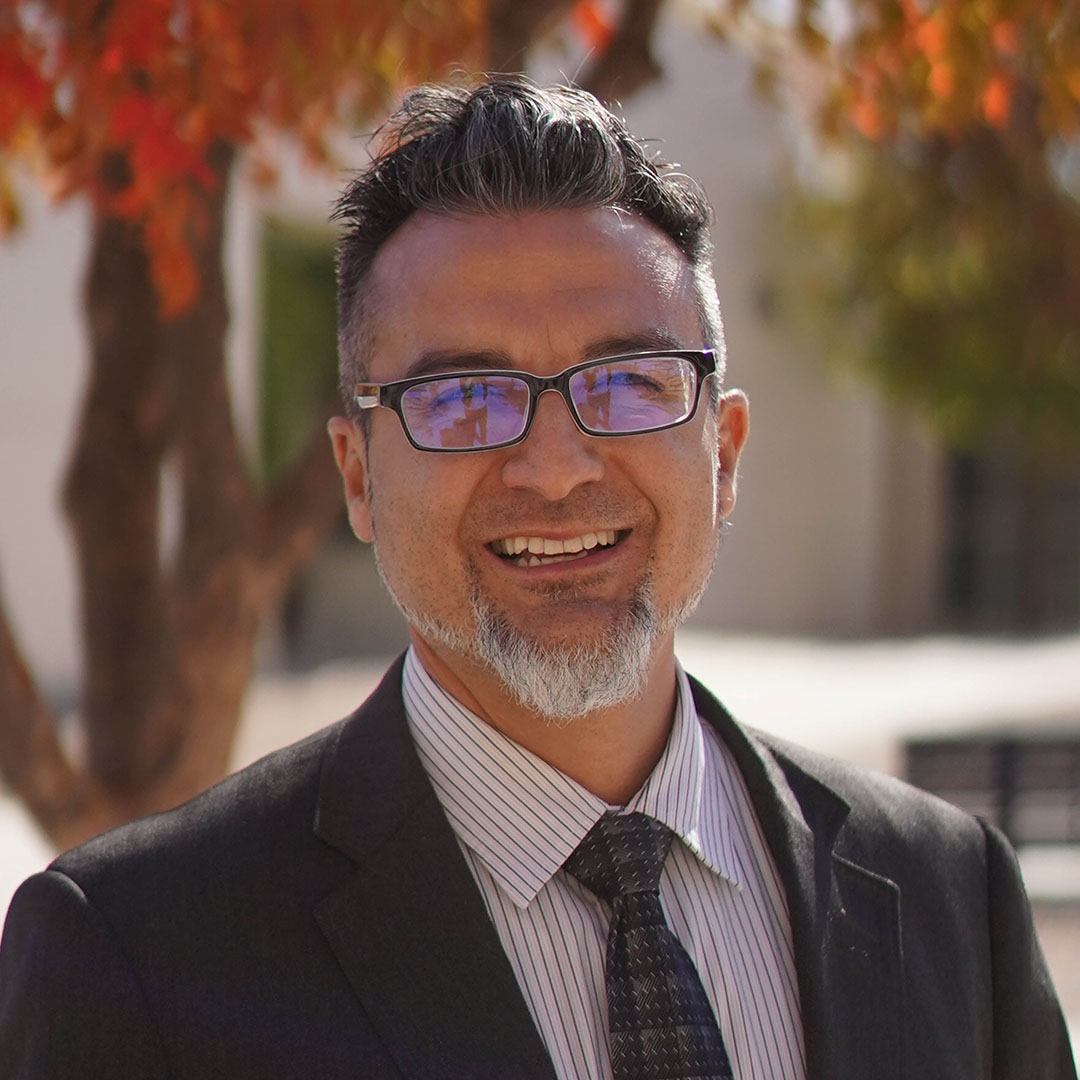
Dr. Jonathan M. Wilson
Dr. Jonathan M. Wilson is an Assistant Professor of English at Southeast New Mexico College. He holds a PhD in English Studies from the University of Texas at Arlington with emphases in 19th and 20th century American Literature, Rhetoric and Writing, and Theory and a specialization in Native American Literature(s). He completed his BA and MA in English Studies at Eastern New Mexico University, and currently, he teaches Professional and Technical Writing, Rhetoric and Writing, Writing in the Humanities and Social Sciences with emphasis on American Culture and Society, and Narrative Theory and Discourse and serves on the Faculty Senate, College Council, Developmental Education Committee, and HSI Steering Committee.