
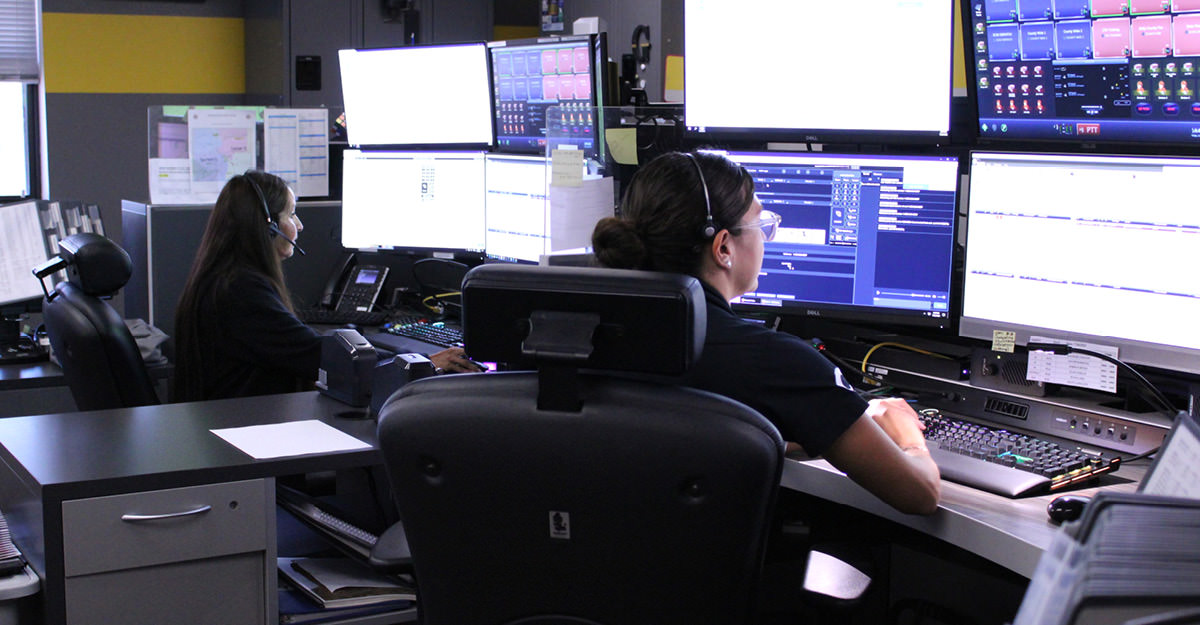
911, where is your emergency?
When an emergency happens, and you need to call 911, you get an actual person on the other line who is focused and dedicated to helping you with your problem. Telecommunicators serve a vital role in the community by dispatching police, fire, or EMS to you when in need.
Commander Katey Prell gave insights into the Carlsbad Police Department’s Telecommunicators division during a recent interview. Commander Prell has been in dispatch for 12 years; the last four have been as Dispatch Commander. She has updated policies and procedures and worked with support from the Chief and others to bring better staffing, higher technological capabilities, and an updated and nationally accredited training manual to the department.
“We’ve spent time and money to upgrade training and technology to make it everything the community needs and deserves,” shared Commander Prell. Telecommunicators go through a 32-week training program, ensuring they are well qualified to handle the calls that come in to 911. “Nobody calls us because they’re having a good day. We have no idea what will be on the other line; could be a bomb threat, a fire, barking dog, etc. I’ve personally helped deliver two babies over the phone,” she added.


As a telecommunicator, dispatchers are classified under federal standards as clerical workers or secretaries. While that was once the case, and those tasks are still performed today, the duties, call volume, mental load, and knowledge and training needed to perform this job are in line with that of First Responders. While they may not be the first on the scene, they are the first to handle the traumatic event.
On April 11, 2023, Chief Skinner presented resolution 2023-16 to the City Council, which is a resolution to support and encourage the State of New Mexico to reclassify and recognize the Carlsbad Police Department Telecommunicators as First Responders. Commander Prell shared that there is much work going on in making forward progress in getting Telecommunicators reclassified as First Responders, starting with the support from the City with the passing of resolution 2023-16. Efforts are also being made at the state level to get Senate Bill 312 seen on the House Floor, which would allow current Public Safety Telecommunicators access to the same types of retirement plans as police officers. At the federal level, work is being done to change the status of telecommunicators from clerical to first responders within the Bureau of Labor Statistics, thus opening much-needed resources like mental health benefits, additional funding, higher pay, recognition, insurance and the like.


Recently, Commander Prell and Dispatch Training Supervisor Michael Munoz attended the Association of Public Safety Communications Officials (APCO) National conference in Nashville, TN. During this conference, Commander Prell received her RPL (Registered Public Safety Leadership) certification, the first to do so in the State of New Mexico. As part of this year-long, intensive leadership program, Prell was required to complete a service project that benefits the industry. Her project was producing and implementing the training program that the Carlsbad Police Department uses for training telecommunicators, and working to get that program accredited.
New technology is coming to Carlsbad with the Next Generation 911 (NG911) system. This is a digital internet-protocol-based system that will replace the analog infrastructure that’s been in place for decades. There will also be access to Smart 911, a free app users can download and register themselves with whatever info they’d like to include: name, age, blood type, allergies, existing conditions, how many pets they have, and so on. Then, that information will populate when they call 911. “Time saves lives; we are bringing new technology that will benefit the community and how we are able to respond,” Prell stated.
Commander Prell also stressed that the safety of their responding officers and sending the correct resources are top priorities for dispatchers; thus, a series of questions need to be asked and answered. Location is the number one piece of information to relay when calling 911.
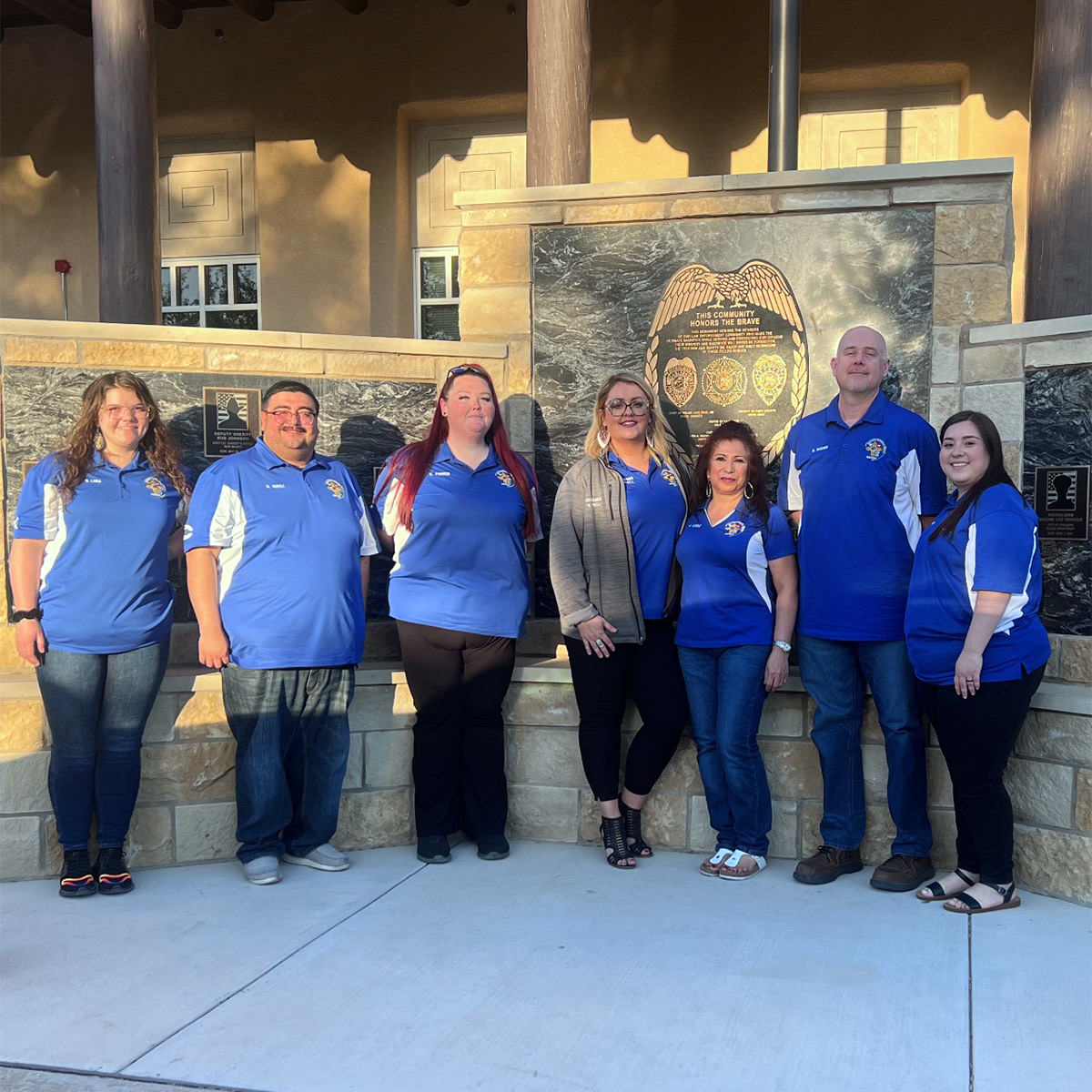
“This is a complicated, stressful, and important job,” said Commander Prell. “Our priority is to make sure our guys come home at the end of the day and that citizens get the assistance they need. We are the unsung heroes, and the first, first responders. This job is more complex than most people think, it’s more than just answering a phone and sending an officer out,” she added.
“You can’t unhear what you hear at work,” Prell shared. There is a minimum of two people per shift, working in 12-hour shifts, 7 a.m. – 7 p.m. or 7 p.m. – 7 a.m.. Weekend shifts have three people per shift from 3 p.m. – 7 a.m.. There is no time to decompress from one call to the next, and there is a constant bombardment of actions that need to be taken. Being mentally alert at all times is taxing, and as a crew, they try to keep each other grounded by checking up on each other and encouraging positive activities outside of work.
If you find yourself in need of calling 911, know that these individuals are humans too and are here to help. The questions they ask and the details needed are not pointless, but essential in sending the right resources to assist you in your time of need.