
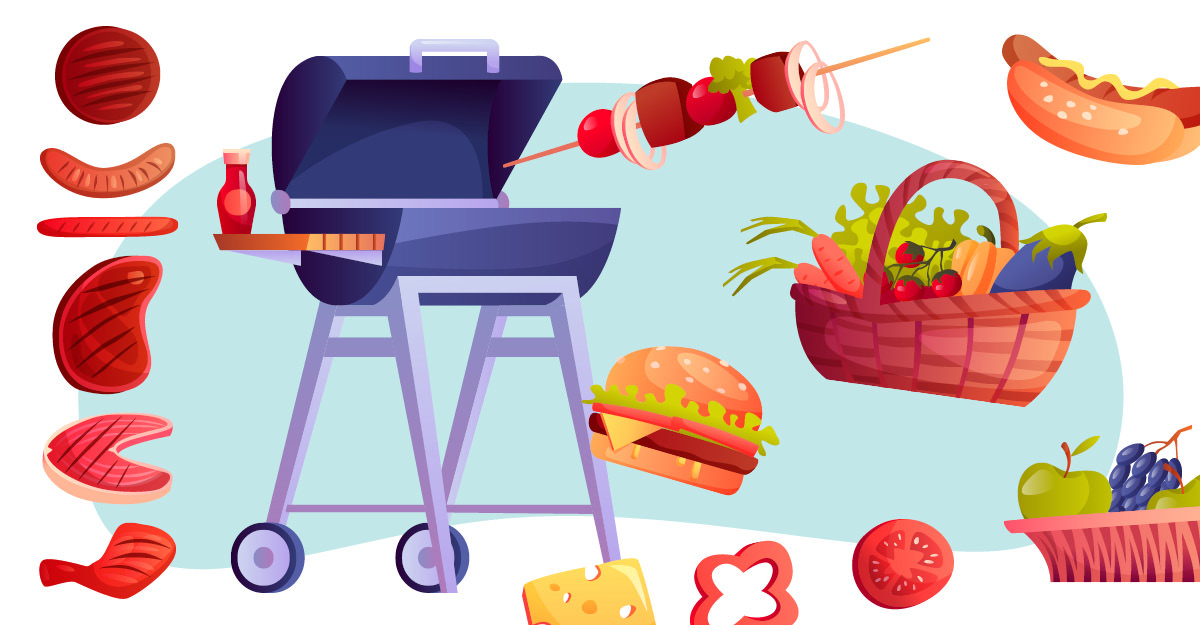
One of the yummiest indulgences this time of year is summer treats—from barbeques to picnics to cooler meals on the road, food is an important aspect of summer fun.
1. Wash! Wash! Wash!
Washing hands is one of the primary ways to keep ourselves and others healthy. Many foodborne illnesses can be prevented by this simple act. Before preparing food, after handling raw meat, and before and after eating, wash your hands for at least 20 seconds in warm, soapy water.
2. Preheat the grill.
Before grilling any food, turn the grill on high for 15-20 minutes to kill any bacteria. Then clean with a grill brush (or even aluminum foil) to remove any debris. When finished, follow up with another good scrub.
3. Defrost meat properly.
Ideally, frozen meat should be thawed in the refrigerator for 1-2 days, staying below 40° F. Meat should NEVER be defrosted on the counter. If you are pressed for time, thawing in the microwave is an option. Be aware that portions of the meat may begin to cook, bringing temperatures to the “Danger Zone.” So, make sure you cook the food immediately after thawing.
4. Separate and marinate.
Raw meat should always be prepared away from fresh and ready-to-eat foods. Always place the meat on the bottom shelf when marinating or storing it in the refrigerator. After marinating, discard the remaining liquid. Never keep marinade to reuse it another time.
5. Clean surfaces.
Before and after preparing food, be sure to clean and sanitize all surfaces. Cross-contamination can easily occur when cleaning is neglected. This is important to remember when handling raw meats. Because you may not always know what was previously set on a surface, make it a regular practice to clean well before and after handling food.
6. Check it.
When grilling meat, use a food thermometer to check the temperature. Ensure the thermometer is placed in the largest section of the meat without going all the way through to touch the grill (which can give a false reading). This is the best way to ensure the meat is fully cooked. Check out the Cooking Chart for safe serving temperatures.
7. Wash. Rinse. Repeat.
Fruits and veggies are a refreshing item on every summer menu. Before loading up your plate, wash all fresh fruits and vegetables under cold water. Even if you do not plan to eat the peel, wash and rinse anyway to remove some of the bacteria. Some fruits like grapes can be washed well ahead of time. Other fruit, like strawberries, are better when washed close to eating time.
8. Keep it cold.
Refrigerated food items should be kept under 40° F. Ice packs can be used around the dish if leaving food out on the table. Coolers should have plenty of ice under and around cold foods to maintain a safe temperature.
9. Group like items.
When coolers are necessary, use one to store drinks and another for holding food. As mentioned already, raw meat should not be stored next to fresh or ready-to-eat food. A disposable cooler is a great option to transport meat prior to cooking. Just be sure to load up all the coolers with ice!
10. Lose the leftovers.
As a general rule, food can be left out safely for up to two hours, but when summer temperatures rise to greater than 90° F, that number decreases to one hour. Pay attention to the length of time the dishes are out, and when in doubt, throw it out!
Meat Cooking Temperatures
| Beef | Cooking Temps |
|---|---|
| Rare | 120° – 125° |
| Medium Rare | 130° – 135° |
| Medium | 140° – 145° |
| Medium Well | 150° – 155° |
| Well Done | 160° – 165° |
| Ground Beef | 155° |
| Poultry | Cooking Temps |
|---|---|
| All | 165° |
| Fish & Seafood | Cooking Temps |
|---|---|
| All | 145° |
| Pork | Cooking Temps |
|---|---|
| Medium | 140° – 145° |
| Medium Well | 150° – 155° |
| Well | 160° – 165° |
| Ground Pork | 155° |
Special Contributor: Allyson Joy

My role as a wife and my calling as a mom to three girls are the greatest blessings! I am also a Registered Dietitian and Certified Strength and Conditioning Specialist turned farm girl when my husband and I started Heirloom Acres Corn Maze & Pumpkin Patch. I have grown to love agriculture and small-town living, two very unexpected adventures that have brought with them some of the greatest joys.