
New Mexico is home to vast, open skies.
The Cosmic Campground in the Gila National Forest has one of the darkest natural night skies on earth and ranks as a world class natural observatory. New Mexicans need only look to the west in the late evening for firsthand knowledge of the most stunning sunsets in the world. It only makes sense that New Mexico would begin to sweep the charts as one of the premiere aerospace industry leaders. With over 310 days of sunshine a year, New Mexico leads the nation in favorable flying conditions. The state’s low population density and large geographic area add to the viability of aerospace success. Between the Very Large Array and a UFO crash site, New Mexico is primed for all things aerospace.
What exactly is the aerospace industry? Are we just talking rocket launches and celebrity spaceship tourism?
Aerospace encompasses all things aviation. New Mexico has all aerospace sectors covered. It is home to Spaceport America. It boasts three Air Force Bases: Kirtland, Cannon, and Holloman Air Force Bases. It includes the White Sands Missile Range. New Mexico State University consists of not only its Physical Science Laboratory, but also includes one of the seven FAA approved UAS testing centers. New Mexico even has options for commercial airplane maintenance.
According to the Mid-Region Council of Governments, over sixty aerospace companies are doing business in New Mexico. Not only are these companies generating millions of dollars in the state, but New Mexico students are also traveling straight down the pipeline to vast and generous employment opportunities. The private sector is not the only foothold for aerospace revenue; the Air Force Research Lab, Space and Missiles Center, and Space Rapid Capabilities Office have a combined annual budget of $900M.
Spaceport America is the first purpose-built commercial spaceport in the world. Owned by the state of New Mexico and located in the Jornada del Muerto desert basin near Las Cruces, Spaceport America encompasses 18,000 acres of land next to White Sands Missile Range and 6,000 square miles of restricted airspace. The complex is extensively used for testing and launches. It was from the Spaceport launch zone that New Mexico became the third state in the nation to send a person to space. Spaceport America is poised to launch New Mexico to the top of space tourism.
Unmanned Aircraft Systems are becoming an industry of their own. Students at colleges all over New Mexico can now take part in drone flight training courses. Drones are used at oilfield locations, for photography, military surveillance and reconnaissance, delivering goods, and monitoring climate change. The industry is exploding, and New Mexico is the perfect location to ride the blast.

Roswell’s International Air Center is a perfect example of aerospace and aviation. Frequent travelers out of Roswell’s Air Center may have noticed the “aircraft boneyard.” The dry and sunny climate of Southeastern New Mexico is preserving those aircrafts. There are companies from around the world that store, refurbish, and dismantle airliners out of Roswell. This air center puts New Mexico on the map as a leader in the maintenance, repair, and overhaul (MRO) industry.
New Mexico is cognizant of the boon a strong aerospace industry could bring to its economy. There are many tax incentives to entice aerospace companies to set up shop in the state. According to New Mexico’s Economic Development Department, New Space NM is a special council of industry leaders, academics, and government representatives working together to make New Mexico the center of innovation for space.
The aliens knew New Mexico was the place to land, now it’s up to the titans of the aerospace industry to follow suit.
Artesia’s Astronaut: Edgar Mitchell
Southeast New Mexico is a gateway to the stars.
With cloudless skies and uninterrupted vistas, a kid’s imagination is destined to get a little “spacey.” Such was the case with Edgar Mitchell, Artesia’s Astronaut.
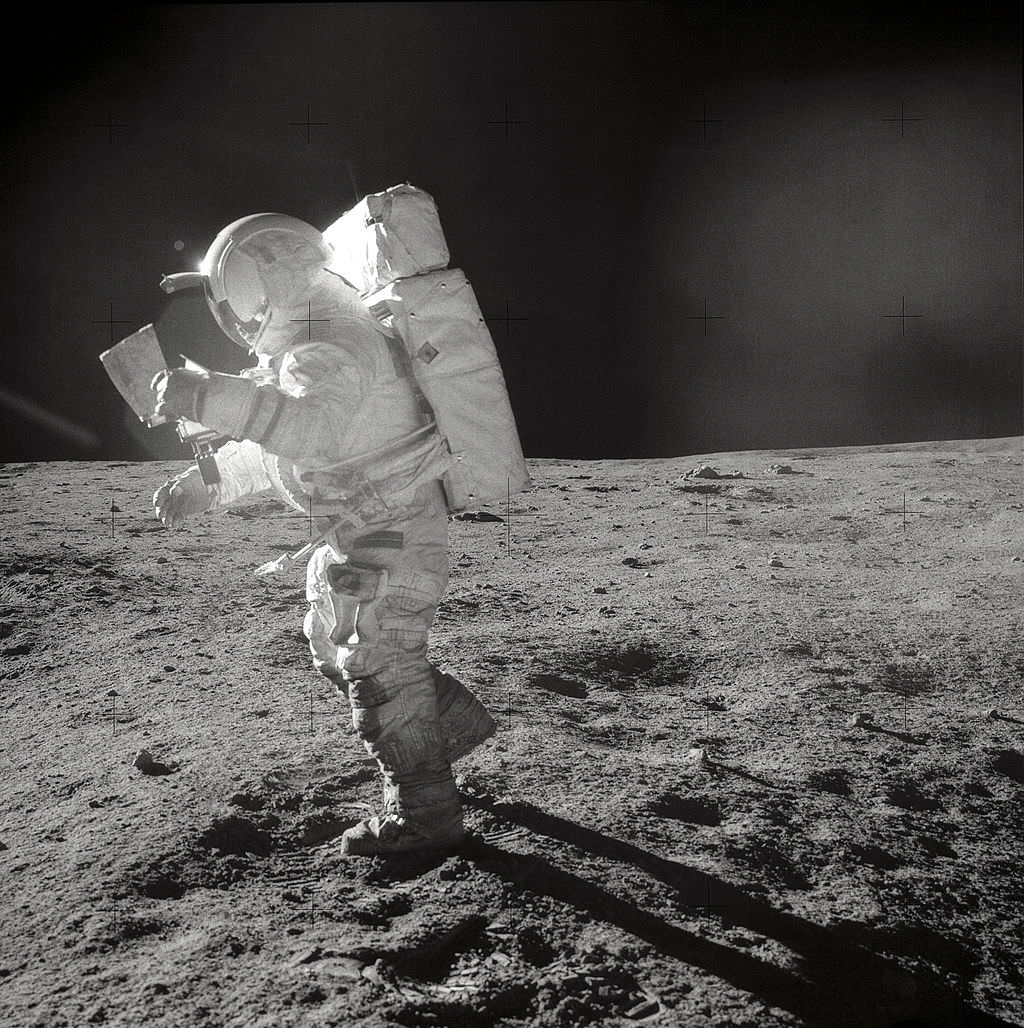
Mitchell grew up outside of Roswell and attended Artesia High School. Becoming a licensed pilot at 13, he displayed an aptitude for aviation. After graduating from Artesia High School, he attended the Carnegie Institute of Technology. Post-graduation, Mitchell joined the Navy in 1952. While in the Navy, he also attained degrees from the U.S. Naval Postgraduate School and Massachusetts Institute of Technology. Mitchell held degrees in Industrial Management, Aeronautical Engineering, and Aeronautics and Astronautics.
Mitchell then worked as a pilot until selected as an astronaut in 1966 by NASA. He became the sixth man to walk on the moon on February 5, 1971. He was part of the Apollo 14 crew and held the then-record of spending 33 hours and 31 minutes on the lunar surface.
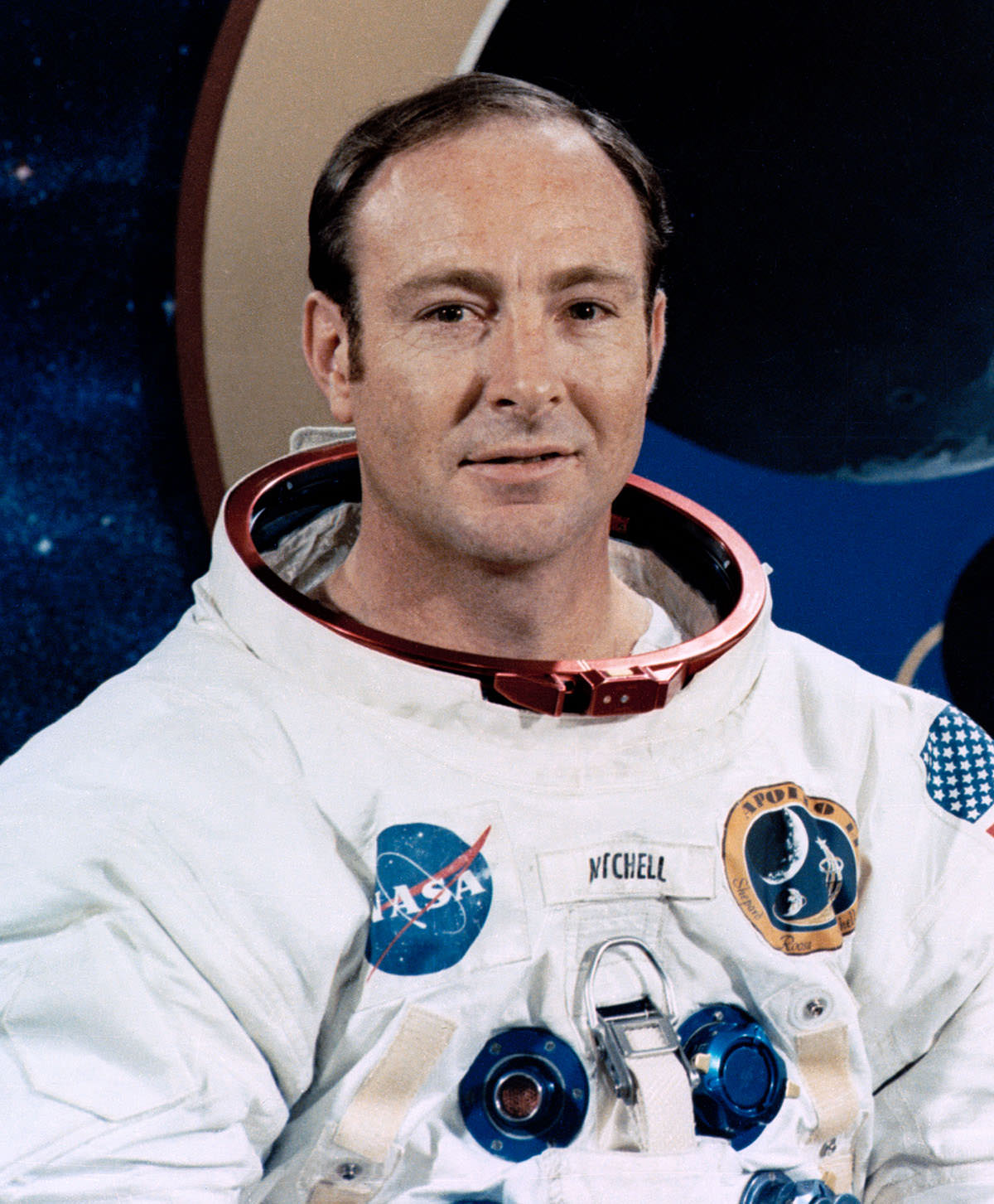
Of his time on the moon, Mitchell said, “You develop an instant global consciousness, a people orientation, an intense dissatisfaction with the state of the world, and a compulsion to do something about it. From out there on the moon, international politics look so petty. You want to grab a politician by the scruff of the neck and drag him a quarter of a million miles out and say, ‘look at that, you son of a …’”
Clearly, Mitchell held onto the scrappy, New Mexican spirit characterizing the attitudes of many residents of this region. Farm people know what I mean: a practical disregard for politics and a reverence for life.
Mitchell also held interest and beliefs in psychic phenomena and the UFO landing in Roswell. After leaving NASA, he founded the Institute of Noetic Sciences (IONS) to study psychic abilities and joined the board of Robert Bigelow’s National Institute for Discovery Science.
Mitchell passed away in 2016 in Florida at age 85.
Article written by Morgan Fox and originally published in Focus Regional 2022 Winter edition.