
Prior to living in Artesia, I did not really understand the fuss over football.

If a game wound up playing on our television, I would wander off to read. The jargon did not mean anything to me; I would not have been able to tell you the difference between first downs or turnovers. I rooted for teams based on the style of their uniforms and who had the cuter quarterback.
Then, we moved our three sons to Bulldog Country, where football is not just a game, it is a culture.
The spirit of Artesia is on full display at the World-Famous Bulldog Bowl: a vibrant green turf illuminated by Friday night lights and surrounded by a sea of orange. Opened to the public in 1967, the bowl is “arguably New Mexico’s most famous football venue.” Over the years, the Bulldog Bowl has seen continual improvements with steady and hearty attendance. The Bulldog Bowl has even been quoted as a “bucket list destination for prep school football fans” by James Yodice in the Albuquerque Journal.
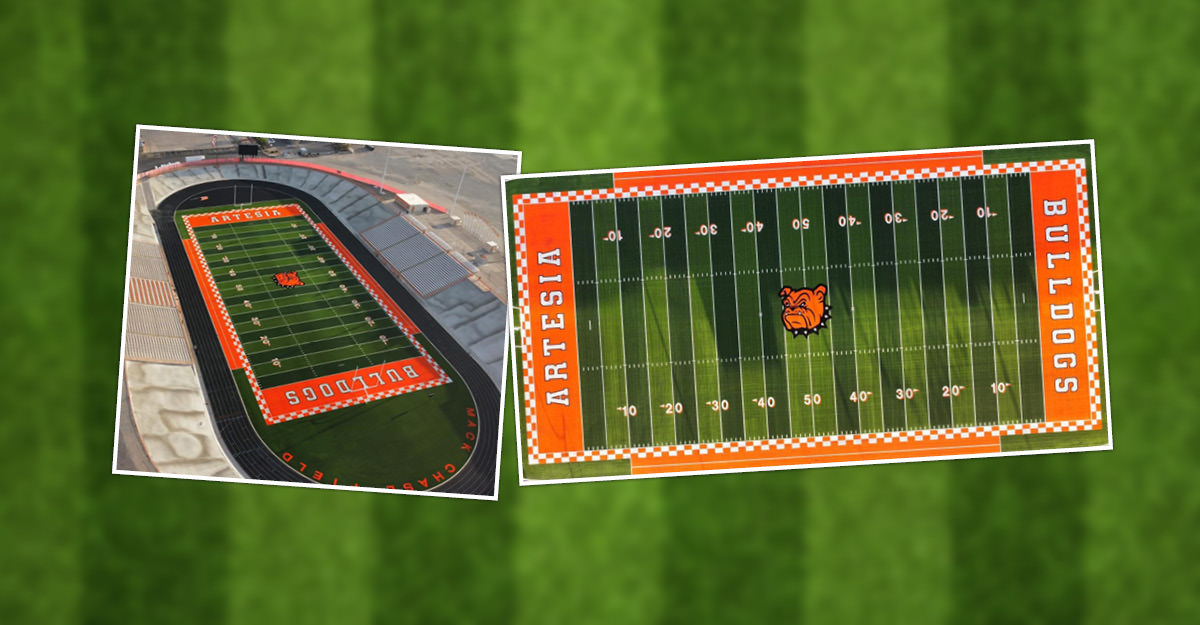
The bowl will be dressed to the nines and sporting a brand-new synthetic turf this fall. While this is not the first time we have seen artificial turf on the field, this replacement will be crisp and clean. Synthetic turf is a top choice for football fields, especially in desert climates. Synthetic turf fields’ aesthetics cannot be topped. Maintenance costs are reduced, and goat heads are obliterated, a touchdown for desert dwelling Artesians.
On football Friday nights, thousands of Artesians pack into the bowl, often overflowing into the visitors’ section. The spirit of community could write the script for a hometown blockbuster movie. It is the stuff of legends. The fervent pride is beyond typical.

Plopped down in the middle of all that hometown pride during our first Bulldog football game, we knew we had found the right home in the New Mexican desert. Our sons were entranced by the band, the lights, the dog pile, and the copious amounts of concession stand treats. We started our football indoctrination right there on the 50-yard line, accidentally sitting in the seats of a three generation Bulldog family. Instead of nearby fans telling us we were in the wrong place, and to move to the general population seating, we were given a heartfelt welcome to Artesia. It was then and there, I decided to learn the game of football, in hopes that someday, my own sons would be out there in Bulldog uniforms playing their way to victory.
The Bulldog Bowl is world famous, not only for its top tier design, box seating, museum, synthetic turf, and iconic style, but also because of the people that unfailingly fill its seats during football season. The community sets aside politics, class, and the differences that seem to pervade and divide our country, to root their hearts out for a common goal: yet another state championship for the winningest team in the state of New Mexico. Artesians know football is so much more than a game; it teaches discipline, work ethic, accountability, and integrity. The lessons learned on the turf impact players’ lives beyond field. As they say in Artesia, “Tradition never graduates.” Go Dogs!
Assistant Superintendent Cody Skinner gives us the lowdown on the most recent improvements to the Bulldog Bowl:
The synthetic turf at the Bulldog Bowl needs to be replaced about every 8-10 years. This will be the third turf field laid at the Bulldog Bowl. The first turf field was laid in the early 2000s, and we are hoping to get at least 10 years out of this new field, or hopefully longer.
The cost to replace the entire field is around $750,000. The funds to do this job come from our HB-33 account, which is the 5 Mill Levy that our community has voted in favor of for many, many years. This funding is used to build and maintain our school buildings and grounds.
By switching to turf from grass, we save thousands upon thousands of gallons of water each year. Living in a desert, we all know how valuable our water resources are! The maintenance cost of having turf is very little compared to the cost of maintaining natural grass.

Some of the other benefits of having a turf field is the G-Max factor (which is a way to measure the field’s ability to absorb shock). A softer field will likely help prevent injuries when athletes have a collision with the field. During a season, natural grass can only take so much abuse. Thousands of pounding footsteps eventually tear up the grass and harden the ground. The 1/2-inch rubber E-Layer underneath the turf, along with the millions of rubber pellets layered between the blades of the synthetic grass all help contribute to our athletes having a comfortable and solid cushion underneath their feet.
The field is designed with a large French drain underneath which is a system of many perforated pipes covered with layers of gravel underneath the turf. This drain allows the water from rain or snow to quickly soak into the ground and away from the field to keep it playable during adverse weather conditions.
The berms at the Bulldog Bowl are also getting renovated. Due to the heavy rains from the last few years, water moved underneath the berm turf and washed some of the basecourse onto the track and football field which damaged the water pumps, some areas of the track, and left large crevices hidden underneath the turf making it dangerous for the children who sometimes run up and down the berms. We are shooting shotcrete onto the berms and covering it with turf. Shotcrete is thick cement similar to that found on the hillsides of canyon walls on narrow, mountainous roads.
The football field turf has a new color design that I think our community will love. We used different shades of green every five yards, and the checkerboard end zones have a different design now. We are anxious for our football season to get started so we can showcase our talented football team, cheerleaders, band, and beautiful facility.
Article written by Morgan Fox and originally published in Focus on Artesia 2022 Fall edition.