
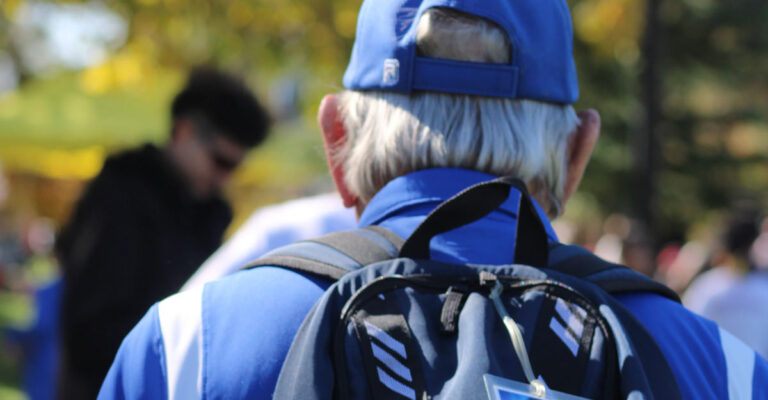
Ask longtime Carlsbad coach Larry Dodson how many years he has been coaching, and you might expect an exact answer.
A number. A season. Maybe even a carefully calculated total. Ask the man everyone knows as Coach Doddy, and the answer comes with a shrug and a smile, “Thirty-plus years. I don’t know.”
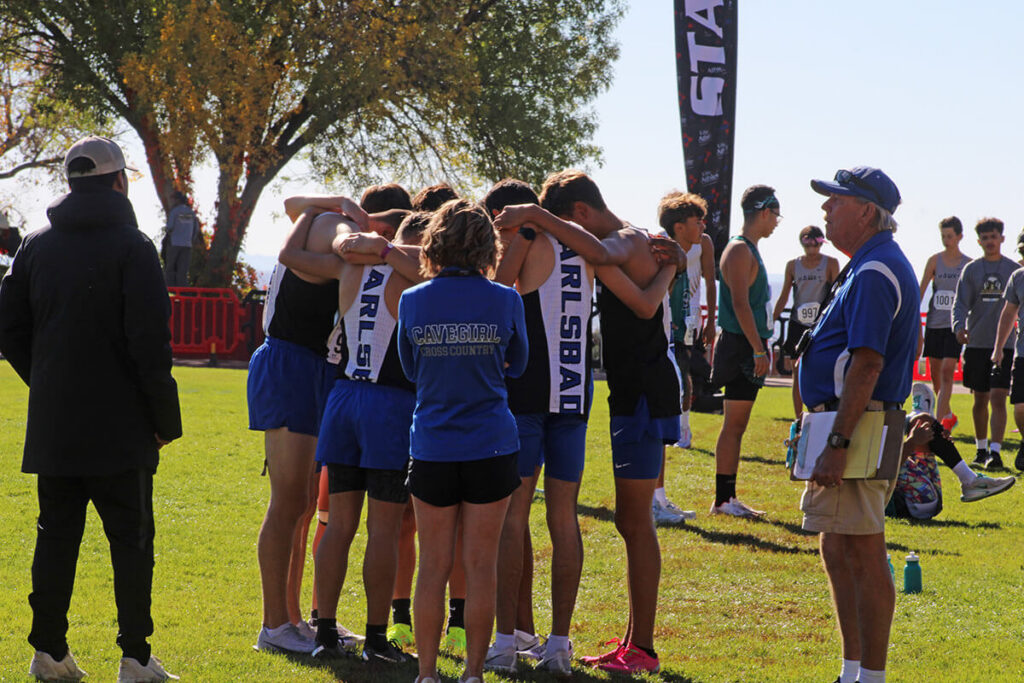
That answer may say more about his coaching career than an exact number ever could. For more than three decades, Coach Doddy has been a familiar presence alongside Carlsbad runners—at practices and meets, on long road trips, at district and state competitions, and, perhaps most importantly, in the everyday moments in between.
His career began without much fanfare. He started as a volunteer, helping with home cross country meets when the program had more than 100 athletes. With that many runners, the team needed two buses to travel, and before long, volunteering at home meets turned into traveling with the team. When an assistant coach left, Dodson got the job. Soon afterward, he was also asked to take over the girls’ track program at Alta Vista. More than 30 years later, cross country and track remain part of his life. His explanation for staying is characteristically simple, “As long as I enjoy it and I’m capable, I’m able to still do it.”
In an issue celebrating Hometown Hustle: Harvesting Success, Coach Doddy’s story raises an interesting question: How do you measure a successful coaching career? “Hustle” can mean so much more than just wins. What measurement of success would you think a longtime coach would use? Championships? Medals? Plaques on the wall? Or by the number of people, decades later, who still stop you around town and call you “Coach”?
Planting the Seeds
Early in his coaching career, Coach Doddy found a mentor in Coach Ron Egan who gave a relatively inexperienced coach something invaluable: trust. Although Egan was the overall head coach, he put Dodson in charge of the girls’ team and allowed him to handle the responsibilities that came with it. “He stepped back and said, ‘This is your team. You’re the head girls’ coach,’” Coach Doddy recalled. “He let me handle everything. So, I kind of had to learn what to do and what was going on.”
Egan was there when needed, but he gave Coach Doddy room to become a coach in his own right. Even when they traveled, Egan made sure Dodson was recognized as the Cavegirl coach. Over the decades that followed, Coach Doddy worked alongside numerous head coaches and eventually became the kind of assistant every head coach hopes to have—the person who sees what needs to happen and handles it before anyone has to ask.
One former head coach put it plainly when telling Dodson he planned to leave the program. “You’re the best assistant coach I’ve ever had,” Coach Doddy remembers him saying. “You think like a head coach. I don’t have to tell you what needs to be done. If I come out, it’s already done. You’ve done it.”
Coach Doddy laughs that “being around that many years does make a difference.” It does. But longevity alone does not teach someone to lead quietly, anticipate problems, support a changing cast of coaches and athletes, and remain willing to do the unglamorous work season after season. That part takes hustle.
Redefining the Win
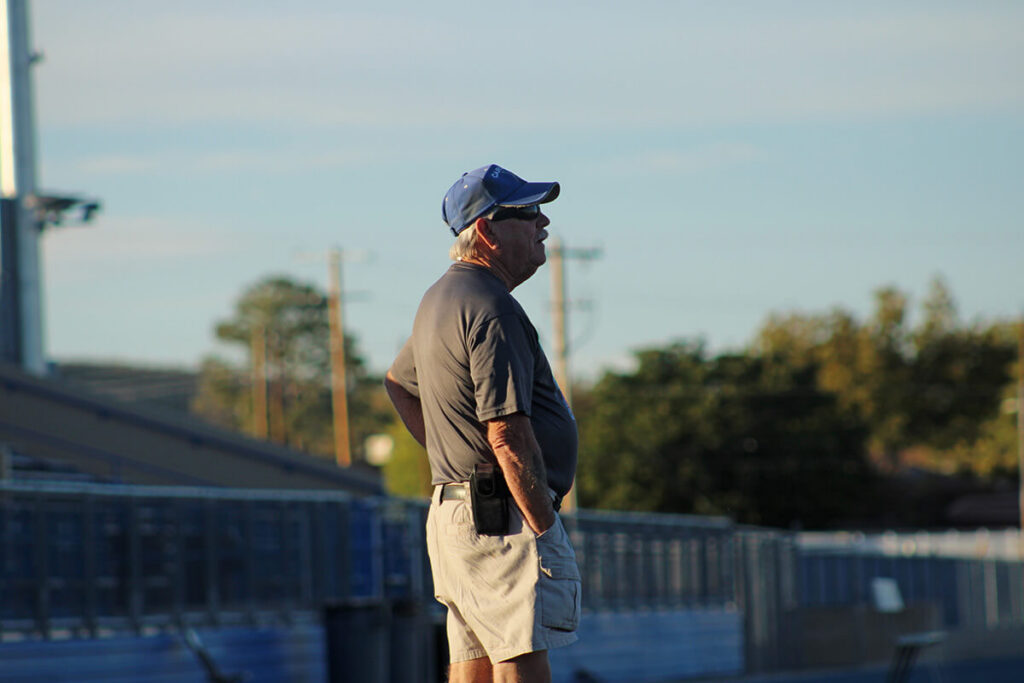
When asked about success, Coach Doddy initially hesitated. “I don’t know that I’m that much of a success,” he said. The record suggests otherwise.
His years with Carlsbad athletics include state champions, a girls’ team that finished third at state, and a girls’ program that captured five consecutive district championships. His cross country teams have also established a remarkable tradition of making the trip to state. “We’ve always taken both teams, boys and girls,” he said. “We always get to go to state.”
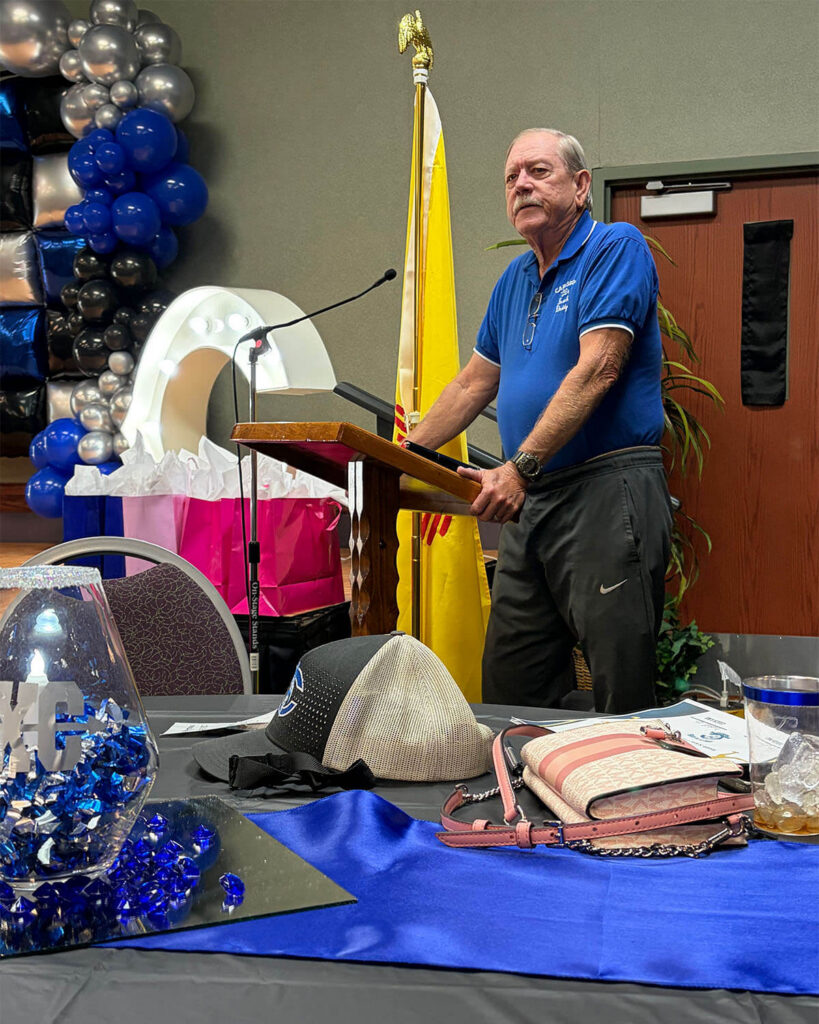
Coach Doddy was recognized as Assistant Coach of the Year in 2011 and has been selected for induction into the New Mexico High School Coaches Association Hall of Fame. Those are the kinds of accomplishments that look good engraved on plaques. But listen to Coach Doddy talk long enough, and another definition of success emerges. “I guess as long as you don’t let it get you down, and you get out and go back and try and do it again,” he states, “I guess that’s kind of success.”
There may be no better description of distance running—or life. Some seasons end with medals. Others don’t. Some athletes stand on a podium. Others simply run faster than they believed they could, breaking personal records along the way. Some teams face competitors with advantages they cannot control. They show up anyway. They compete. They have fun. And then they come back and try again. Coach Doddy is a big reason for their dedication.
More Than a Nickel an Hour
Spectators get to see the race. They do not necessarily see everything required to get athletes to the starting line. There are entries to complete, events to organize, transportation to coordinate, decisions to make, parents to call, problems to anticipate, and countless hours spent thinking about the team long after practice has officially ended. Coach Doddy says if we did the math, coaches probably make less than a nickel an hour.
It is work that rarely fits neatly into the hours listed on a coaching contract. And yet, Coach Doddy kept coming back. Season after season. Team after team. Generation after generation. At one point, he even tried stepping away. When another coach decided to call it quits, Dodson figured it might be time for “some new blood.” He missed one cross country season. Then came the requests to return. Guess what? He did. Because for all the work involved in coaching, the relationships have always mattered most to Coach Doddy.
The Memories Between the Medals
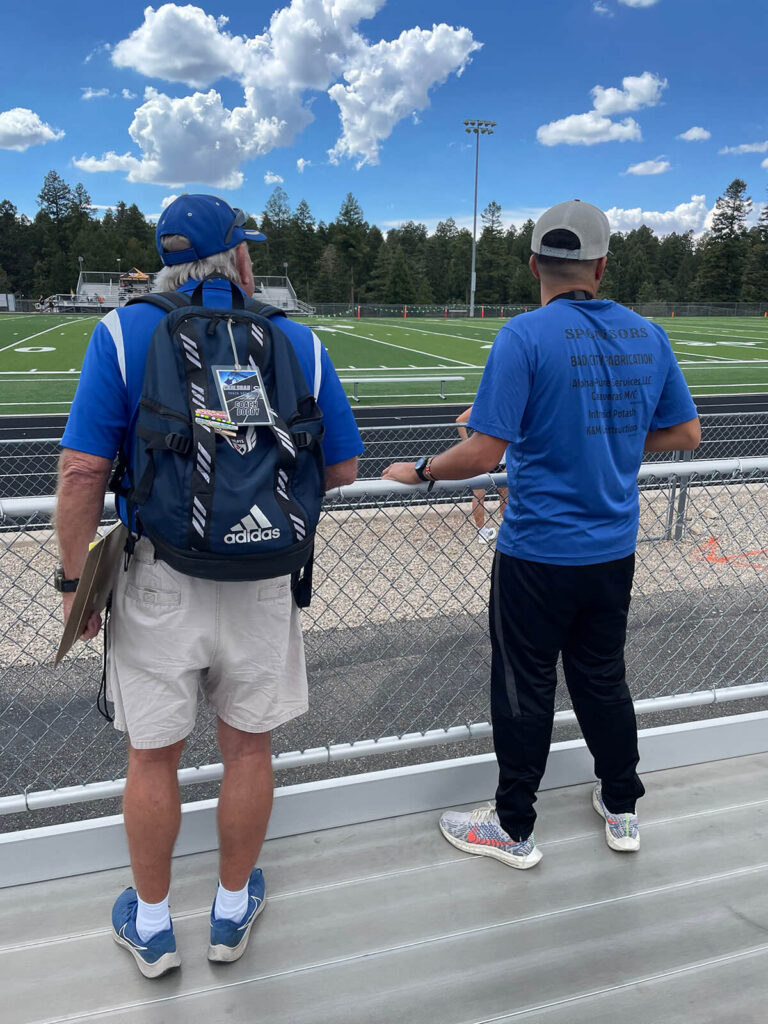
Spend more than 30 years traveling around New Mexico with teenagers and eventually the stories become as important as the statistics. There are the state meets, the long bus rides, and the miles upon miles of New Mexico highway. Coach Doddy jokes about having joined the “million mile club” after so many years traveling with teams.
There are also the stories that could never be captured by a scoreboard. One state trip included a stop at Rudy’s on the way to Albuquerque when Krispy Kreme was still something of a novelty in New Mexico. Everyone had heard about the doughnuts, and the team was determined to try them.
Those are the moments that accumulate over a coaching career: bus rides and inside jokes, meals on the road, music playing as radio stations fade in and out across New Mexico highways, state meets, victories, disappointments, and a thousand ordinary moments that never make it into a record book. Eventually, those moments become relationships. And those relationships become a legacy.
Still “Coach”
Perhaps the clearest evidence of Coach Doddy’s success appears nowhere in the official athletic record. It happens at the store. At games. At the college. Around town. Former students and athletes recognize him and stop to talk. One young man once approached him with an almost unbelievable connection—Coach Doddy had been his grandmother’s teacher. Another woman mentioned that Dodson had coached her daughter, Nancy. Less than two weeks later, Coach Doddy walked into the gym and spotted Nancy herself standing along the rail, now watching one of her own children.
Decades collapse quickly in a hometown. The teenager becomes the parent in the stands. The athlete becomes the teacher, professional, community member, or coach. New runners take their places at the starting line. And somehow, Coach is still Coach.
That kind of longevity brings another form of recognition, too. When the letter arrived announcing one of Coach Doddy’s coaching honors, his wife was thrilled. “Finally, you’re getting some recognition,” she told him. She framed the letter. It still hangs on the wall in his home. It is a sweet detail for a man who seems far less interested in collecting recognition than in simply doing the work.
Behind the Scenes
In addition to the accolades adorning Coach Doddy’s house, the words of Coach Millar speak volumes. “Doddy is a great coach! He’s been around for a few decades but hasn’t lost his love for the sport or his passion for coaching athletes. He’s an athlete favorite because of his calm demeanor and his knowledge of track and field. He has really embraced his role as a coach and mentor. Doddy can coach with the best of them as well as provide wisdom and advice for every situation. He is a great coach and an even better person! He is an incredible staple of CHS track and is loved by all.”
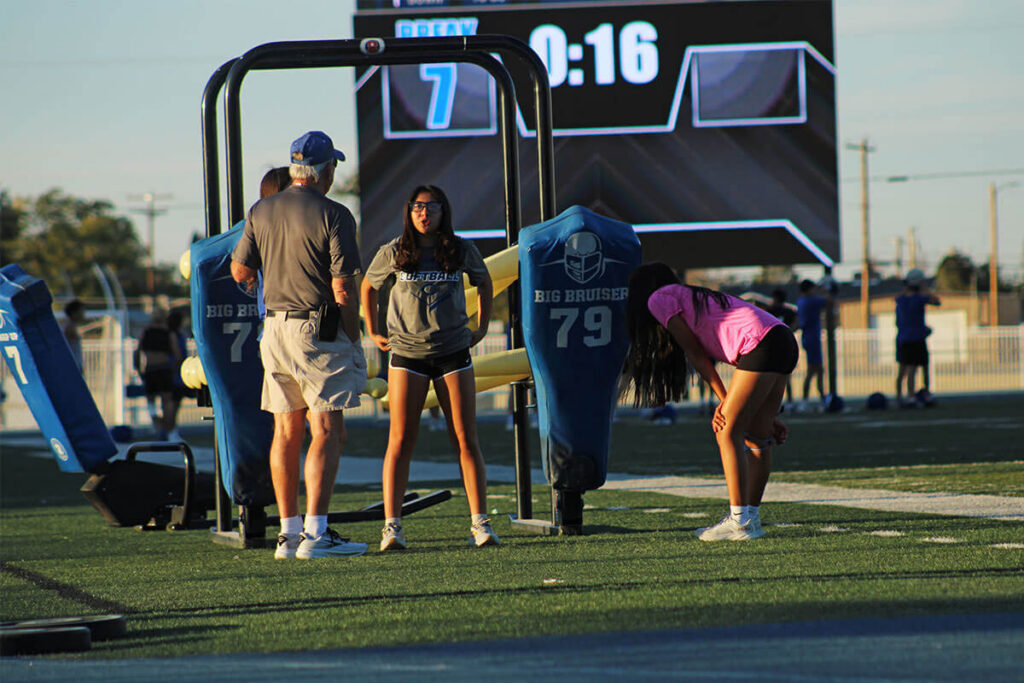
Having had the personal privilege of coaching alongside Coach Doddy, I have seen firsthand that his impact on young athletes reaches far beyond his knowledge of cross country and track. It is found in his words of wisdom, his well-timed grandpa jokes, and, most of all, in the genuine care he extends to everyone around him. Doddy has a remarkable ability to maintain the boundaries and expectations of a coach while still making every athlete feel seen, valued, and cared for. He rarely gets angry, and perhaps that is why when Doddy speaks, people listen. His words carry weight because they come from decades of experience, consistency, and a genuine desire to see others succeed.
That same steadiness trickles down to the kids he coaches. Doddy shows them what it looks like to give your best without needing recognition in return, to be grateful for what you have, and to quietly look out for those who may have less. He shows up—for the program, for his fellow coaches, and especially for the athletes—day after day, year after year, giving them the same patience, humor, compassion, and wholehearted effort whether anyone is keeping score or not. For all our jokes about coaches earning less than a nickel an hour, there is something extraordinary about someone who continues to give so much of himself simply because he believes those kids deserve it.
To generations of athletes and coaches, Doddy has become something of an adopted dad or grandpa—the person you can count on to be there, to tell you what you need to hear, to make you laugh, and to care with his whole heart. Spend any amount of time around him and one thing becomes obvious: this is where Coach Doddy loves to be. And perhaps one of the greatest lessons he has passed down to the young people fortunate enough to know him is that success is not only about what you accomplish. Sometimes, it is measured by how consistently you show up for others along the way.
Harvesting Success
Hometown success rarely happens overnight. It is planted in small decisions made consistently over years: showing up, doing the work, expecting something from people, offering another chance after disappointment, and returning tomorrow to try again. Eventually, you look around and realize something has grown. For Larry Dodson, there are certainly trophies, championships, and plaques to point toward. There is a Hall of Fame honor bearing his name.
But the richer harvest may be scattered throughout Carlsbad. It is in former athletes who still stop to say hello. It is in runners who learned they could go farther than they thought. It is in coaches who knew they had someone beside them who would see what needed to be done. It is in stories from state meets, long road trips, and countless miles traveled together. And it is in generation after generation of young people who have known Larry Dodson simply as Coach Doddy.
Maybe that is why, after more than 30 years, he still hesitates to describe himself as successful. He has never seemed particularly interested in collecting the credit. He has simply kept showing up.
And maybe that is the lesson hidden inside his definition of success: You don’t have to win every race. You don’t have to let a loss convince you that you’re finished. You get back out there. You try again. And if you’re lucky, decades later, you discover that what you were building was much bigger than a winning season.
Coach Doddy, you are a true success story and an inspiration to so many. Your heart and passion for helping others will always be your legacy. From me, and the countless others whose lives you have touched, we thank you.
Photography by Karey Maciha and Joslyn Ontiveros
Article written by Karey Maciha and originally published in Focus on Carlsbad 2026 Fall edition.

Karey Jeffress
Karey Jeffress, a Carlsbad native, loves helping others live their lives to the fullest. Karey’s passions for teaching and healthcare background have inspired her career in education. She has a Master’s in Public Health Promotion, and is working toward a Doctorate in Health Professions Education. Karey is the Allied Health Teacher at Carlsbad High School, a certified Mental Health First Aid and QPR Gatekeeper instructor, yoga teacher, mental health advocate, and community outreach professional. Her other loves include her husband, Dale, and her dogs, as well as attending concerts and baseball games, playing outdoors, local brews, and good nachos.